
A plain canvas tote bag is one of the easiest and most satisfying things to paint. The surface is flat, the fabric holds paint well, and you end up with a bag you can use every day or give as a gift. If you have wondered how to paint a canvas tote bag so the design stays bright and does not crack or wash out, the process is simple once you know a few key steps.
Below you will find the supplies to use, how to choose and prepare the bag, design ideas that suit beginners, the painting steps, and how to heat set and care for the finished tote. For more inspiration before you start, browse our fabric painting ideas for beginners.
This post contains affiliate links. As an Amazon Associate I earn from qualifying purchases, at no extra cost to you.
What You Need to Paint a Tote Bag
You do not need special art supplies to paint a tote. The most important choice is the paint, because ordinary acrylic paint on its own can feel stiff and may crack where the bag folds.
- A cotton canvas tote bag (a plain, light colour is easiest)
- Fabric paint, or acrylic paint plus fabric medium
- Synthetic brushes in a few sizes, including a flat brush and a fine liner brush
- A piece of cardboard or a plastic sheet that fits inside the bag
- Chalk, a pencil or a washable fabric marker for sketching
- Painter’s tape or stencils (optional)
- A palette or old plate, a water cup and paper towels
- An iron and a thin cotton cloth for heat setting
A basic fabric paint set is the easiest way to start, because the paint is made to stay soft and flexible on fabric. If you already own acrylics, mix them with a fabric medium instead. Our guide on how to use fabric medium with acrylic paint explains the ratio and why it matters.
Choosing the Right Tote Bag
Natural cotton canvas is the best surface for painting. It is thick, absorbent and smooth enough for clean lines. Heavier canvas, often sold by weight such as 10 oz or 12 oz, feels sturdier and lets less paint soak through, while thin budget totes also work but need a lighter touch and fewer wet layers.
Light colours like natural, cream or white show paint colours the way they look in the bottle. On black or navy bags, most paints look duller unless you use opaque fabric paint or paint a white base layer first. Avoid bags with a shiny coating or a high synthetic content, because the paint has less to grip. Our guide to the best fabric for fabric painting compares cotton, canvas, polyester and blends in more detail.
How to Prepare the Tote Before Painting
Wash the new bag first with a little detergent and no fabric softener. New canvas often carries sizing, a finish that can stop paint from soaking in evenly, and softener leaves a film with the same effect. Washing also lets cotton shrink a little before you paint instead of after. Let the bag dry fully.
Iron the tote flat so creases do not break up your lines. Then slide a piece of cardboard, a cutting mat or a plastic folder inside. This keeps the paint from soaking through to the back and gives you a firm surface to work on. Smooth the fabric over the board and tape the edges down if the bag shifts.
Sketch your design lightly with chalk, a sharp pencil or a washable fabric marker. Keep the sketch simple, since you can add details with paint later. If you want straight stripes or a geometric pattern, press painter’s tape firmly along the edges at this stage.
Easy Tote Bag Design Ideas for Beginners
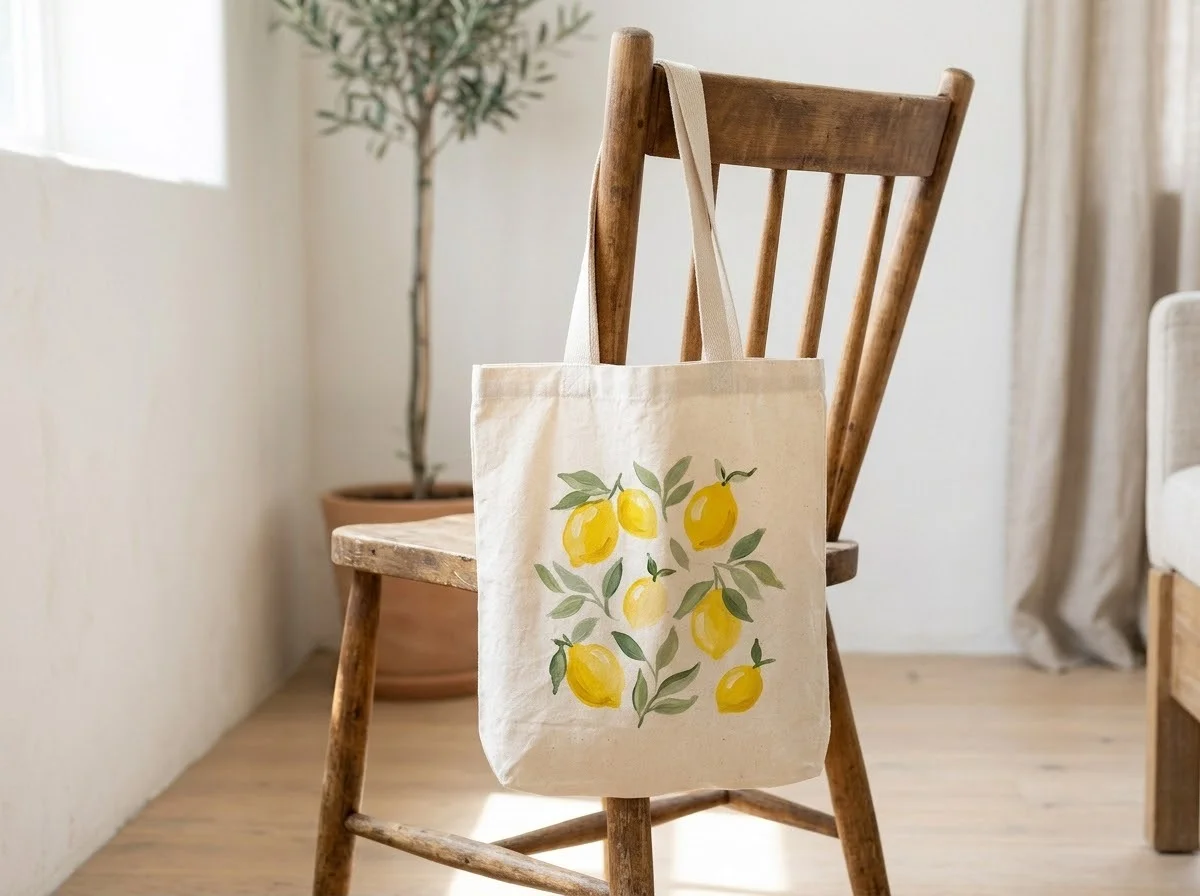
The best first designs use simple shapes and only a few colours. Botanical leaves, lemons and other fruit, rainbow arches, polka dots, wavy lines and a short hand-lettered word all look good on a tote and are forgiving if your lines are not perfect.
Plan where the design will sit. Most totes look best with the design centred in the top two thirds of the front, because the bottom often bends when the bag is full. Leave a margin of at least an inch or two from the seams and handles, which are bulky and hard to paint neatly.
If drawing freehand worries you, use a stencil, stamp shapes cut from a kitchen sponge, or trace a printed design. The tracing methods in our guide to transferring an embroidery pattern to fabric work just as well for painting.
How to Paint the Tote Step by Step
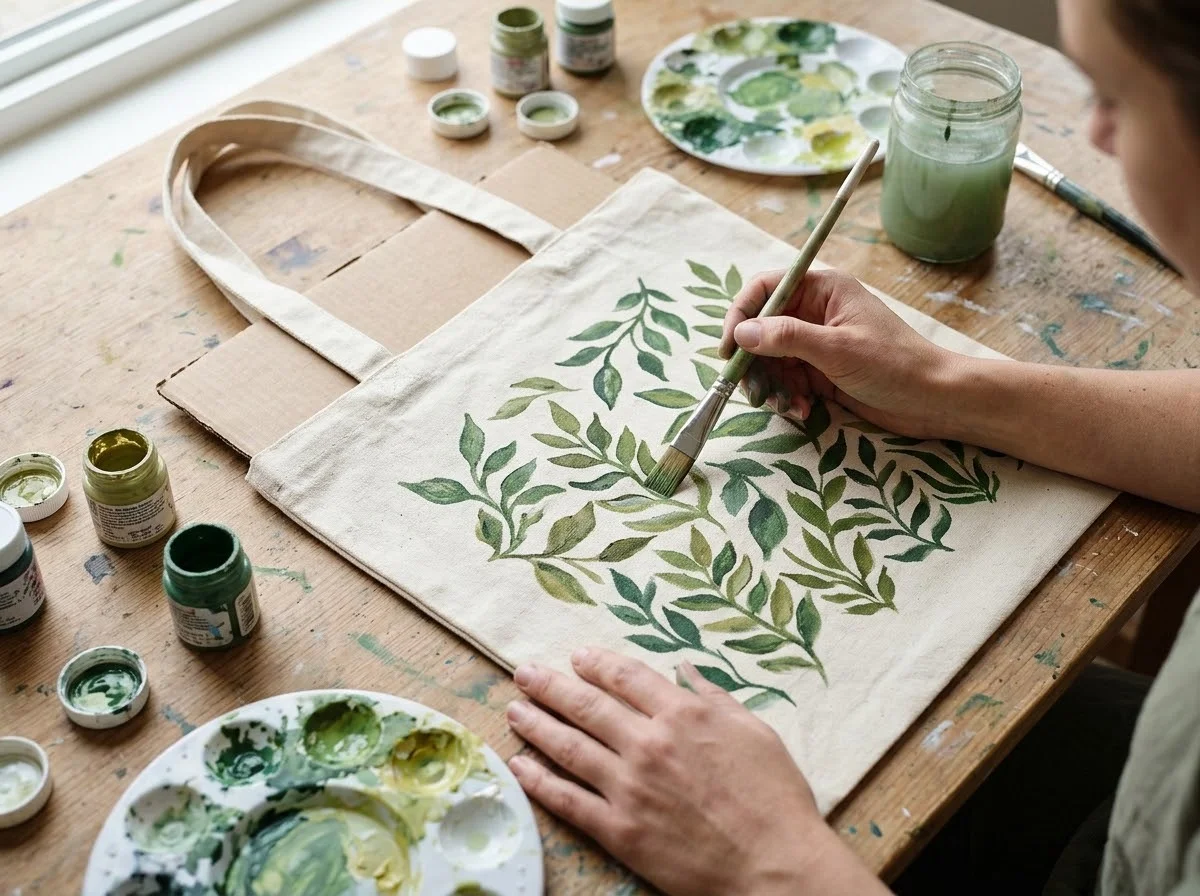
Work at a table with good light and keep the bag flat on its board the whole time. Painting is the quick part; the steps below keep the colours clean and the finish soft.
- Squeeze a small amount of each colour onto your palette, and mix acrylic with fabric medium now if you are using it.
- Start with the largest areas and the lightest colours, using a flat brush.
- Work the paint into the fabric with short strokes so it reaches between the fibres.
- Paint thin layers and let each layer dry to the touch before adding the next.
- Add darker colours and details with a smaller brush once the base is dry.
- Finish with outlines or fine lines using a liner brush.
- Peel off painter’s tape while the last layer is still slightly damp for clean edges.
Thin layers matter more than anything else. A thick layer sits on top of the canvas, feels stiff and is more likely to crack when you fold the bag, while two or three thin coats soak in and stay flexible. If the colour looks patchy after the first coat, that is normal on canvas and the next coat will even it out.
Keep the cardboard inside until everything is dry. Lay the bag flat, away from direct heat and sunlight, and do not fold it while the paint is fresh.
How to Dry, Heat Set and Care for a Painted Tote
Let the paint dry for about 24 hours before heat setting. It may feel dry much sooner, but the paint needs time to cure inside the fibres. For more detail on timing, see how long fabric paint takes to dry.
To heat set, take out the cardboard, set the iron to the cotton setting with no steam, cover the design with a thin cotton cloth and press for a few minutes, keeping the iron moving so no area overheats. Always follow the instructions on your paint bottle, because times vary by brand. Our full guide on how to heat set fabric paint covers the iron, dryer and oven methods.
Wait 72 hours after heat setting before the first wash. Then turn the bag inside out, wash it in cold water on a gentle cycle or by hand, and let it air dry. Avoid bleach and harsh stain removers on the painted area. These care steps are the same as in our guide on washing clothes with fabric paint.
Common Mistakes to Avoid
Skipping the pre-wash is the most common mistake, and it can make the paint sit unevenly or peel later. Painting without cardboard inside is the second, because the paint soaks through and marks the back panel of the bag.
Using plain acrylic paint without fabric medium often gives a stiff, crackly finish, and thick, heavy layers cause the same problem. Painting right over seams and handles is also tricky, because the fabric folds there. Finally, washing too soon, before heat setting and the 72 hour wait, is the quickest way to fade a fresh design.
Frequently Asked Questions
Can I use regular acrylic paint on a canvas tote bag?
Yes, but mix it with fabric medium so it stays soft and flexible. Acrylic paint on its own does stick to canvas, but it tends to feel stiff and can crack when the bag is folded.
Do I need to heat set paint on a tote bag?
Yes, if you want the design to survive washing. Heat setting helps the paint bond with the fibres. Let it dry for about 24 hours, then iron it following the instructions on your paint.
How do I stop paint bleeding through the tote?
Slide cardboard or a plastic sheet inside the bag before you start, and paint in thin layers rather than heavy, wet coats.
Can I paint a black or dark tote bag?
Yes. Use an opaque fabric paint, or paint a thin white base layer first and add colour on top once it is dry.
The Bottom Line
Painting a canvas tote bag is a great first fabric painting project. Pre-wash the bag without softener, put cardboard inside, sketch a simple design, and build the colour in thin layers with fabric paint or acrylic mixed with fabric medium. Let it dry for about 24 hours, heat set it, and wait 72 hours before the first gentle wash. For background on the fabric itself, see the canvas article on Wikipedia. Once your tote is done, try a bigger project like painting jeans with fabric paint.