
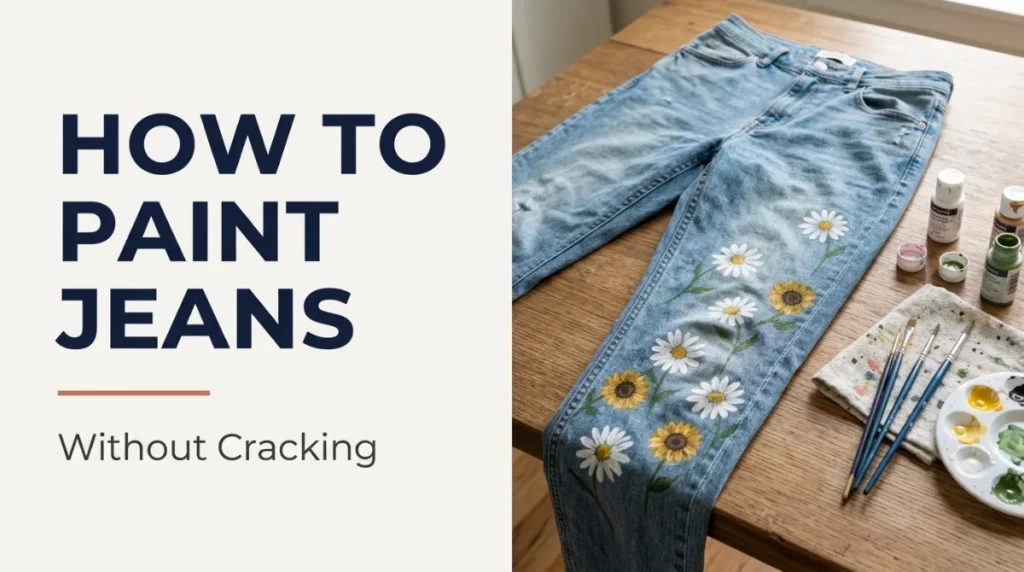
Painted jeans look effortless in photos. Then you try your own pair and the paint sits on top of the denim like a sticker, cracks the first time you sit down, or fades after one wash. Denim behaves differently from a cotton tee, and once you understand why, painting it becomes much easier.
This guide covers what beginners usually learn the hard way: which jeans take paint best, how to make regular acrylic flexible, how to paint dark denim so colors really show, and how to set the design so it survives the washing machine.
This post contains affiliate links. As an Amazon Associate I earn from qualifying purchases, at no extra cost to you.
Quick answer
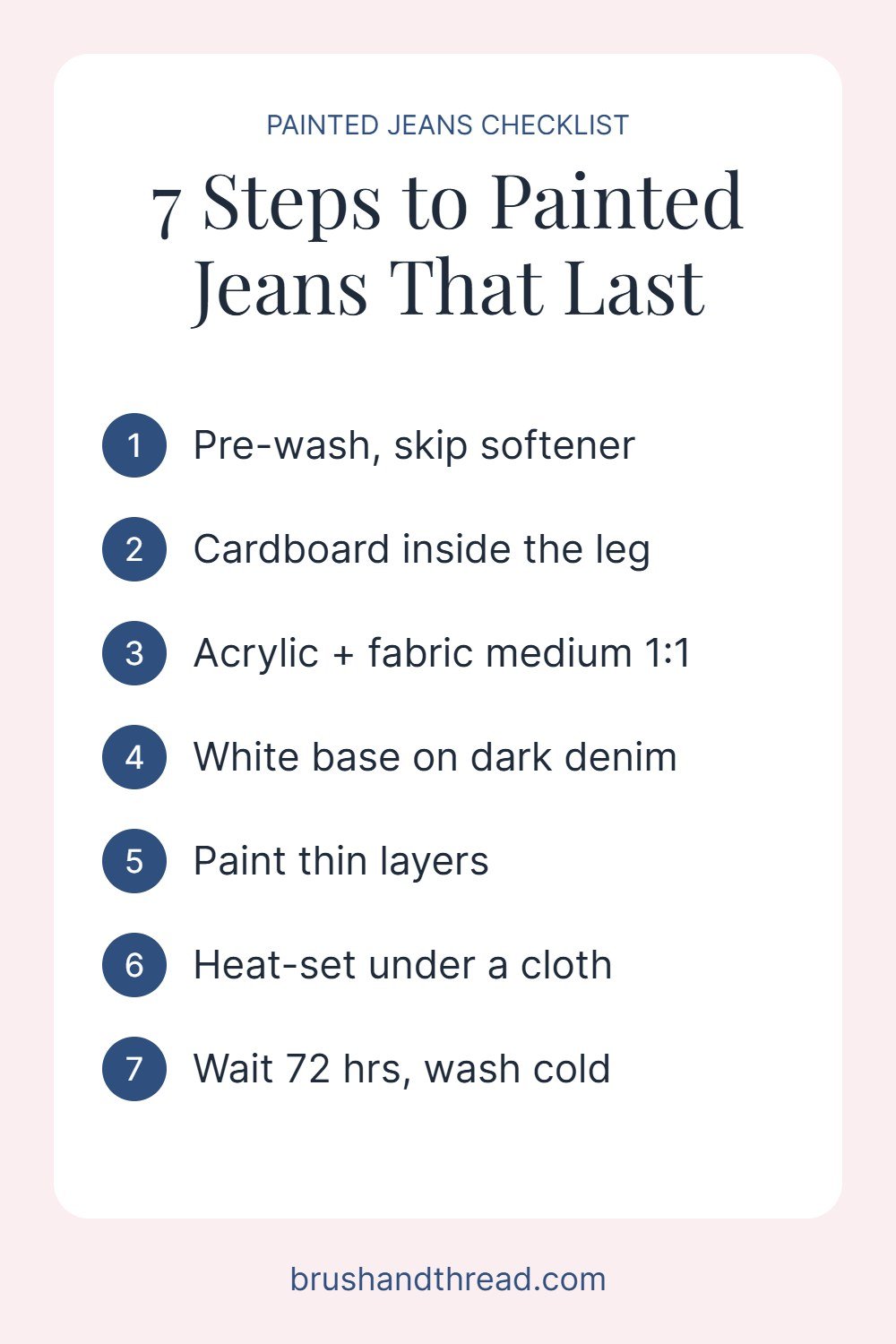
Pre-wash the jeans without fabric softener, slip cardboard inside the leg, and paint with fabric paint or acrylic mixed 1:1 with fabric medium. Build thin layers, use a white base coat on dark denim, let the design dry fully, heat-set it, then wait 72 hours and wash cold and inside out.
Choosing the Right Jeans and Supplies
Not every pair paints the same way. Jeans that are mostly or fully cotton, including stiff rigid denim, grip paint well and handle heat-setting without trouble. Stretch denim with elastane or spandex works too, but the fabric stretches further than the paint can, so keep designs away from high-stretch areas and use a lower iron setting. Light washes show color easily, while dark indigo or black needs a white base layer first. If you are nervous, thrifted jeans are perfect practice: they are already soft and pre-shrunk, and nothing is lost if the first attempt goes sideways.
For supplies, you need fabric paint, or acrylic paint plus a fabric medium such as GAC 900, and some white paint for base coats on dark denim. Add a small flat brush and a fine liner brush, a piece of cardboard cut to fit inside the leg, chalk or a white fabric pencil for sketching, and an iron with a pressing cloth or baking paper. Painter’s tape is optional but useful for stripes and crisp edges.
Fabric Paint or Acrylic? Why It Matters on Denim
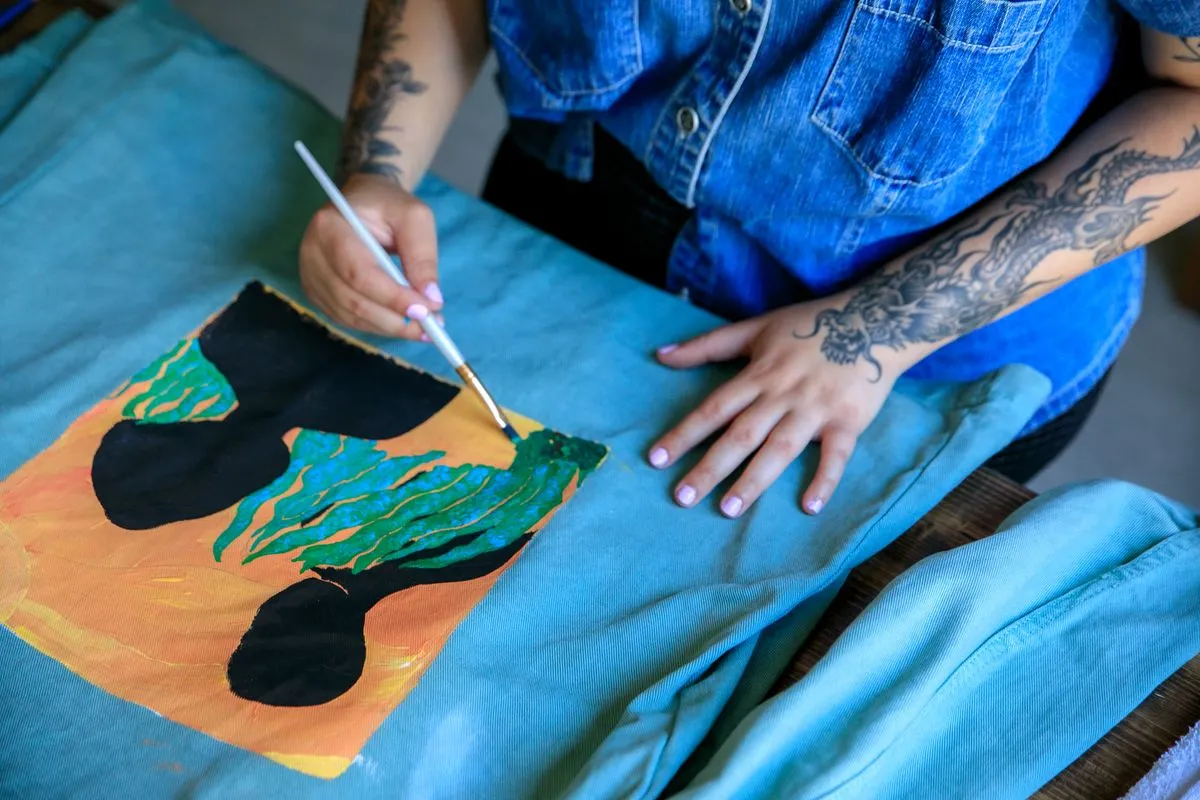
Regular acrylic paint dries hard. On denim that bends at the knees and hips all day, hard paint cracks. Fabric medium solves that problem: it keeps acrylic flexible and helps it soak into the fibers instead of sitting on top.
Golden, the maker of GAC 900, recommends starting with a 1:1 ratio of paint to medium and adjusting from there. Ready-made fabric paint already has that flexibility built in, so it is the simpler choice if you are buying new. Not sure which way to go? Our guide on using acrylic paint on fabric compares the two in detail.
Prepping the Denim and Planning the Design
Start by washing and drying the jeans with no fabric softener. New denim carries sizing and factory finishes that stop paint from soaking in, and softener leaves a coating that does the same. Once they are dry, slide cardboard inside the leg under the area you plan to paint. Denim is thick, but paint still bleeds through to the back layer. Smooth the fabric flat and tape the cardboard edges if the leg keeps shifting.
Placement matters more on jeans than on a shirt because denim folds and rubs in predictable places. Back pockets, the lower leg, the outer thigh and the hem are all great spots. Behind the knee, the crotch and the inner thigh are tricky, because constant bending and friction wear paint off quickly. Try the jeans on and mark where the design should sit with chalk, since things look different when the jeans are flat. Then sketch the design lightly; chalk and white fabric pencil both brush away if you change your mind.
Painting: Base Coat First, Then Thin Layers
On dark jeans, colors painted straight onto the indigo look muddy because the blue shows through. Paint the shape in white first, let it dry, and then add color on top. On light-wash denim you can usually skip this step.

When you paint, load the brush lightly and work the paint into the weave rather than laying it on top. Keep every layer thin, because thick paint is what cracks; three thin coats are far better than one heavy one. Let each layer dry to the touch before adding the next. With fabric medium, Golden notes that air drying usually takes one to four hours depending on thickness. Add outlines and fine details last with a liner brush or a fabric marker.
Looking for inspiration first? Levi’s has a helpful artist walkthrough on painting denim, and our list of fabric painting ideas includes easy patterns that translate well to jeans.
Drying, Heat-Setting and the First Wash
Heat-setting is what turns a painted design into a permanent one; skip it and the paint can wash right out. Let the paint dry completely first. A full 24 hours is the safe choice, and our guide on fabric paint drying times explains how to tell when it is ready. Cover the design with a pressing cloth or baking paper and iron with no steam, keeping the iron moving. Cotton denim can take a high setting; stretch denim needs a lower setting for a little longer. Turn the jeans inside out and press the back of the design too.
Always follow your paint or medium’s own heat-setting directions if they differ, test on a hidden spot such as the inside of the hem first, and work in a ventilated room. After heat-setting, wait 72 hours before the first wash. Then turn the jeans inside out, wash cold on a gentle cycle and line dry. For the complete routine, including what to do if paint cracks or fades, see our guide on how to wash clothes with fabric paint.
Easy Designs for Your First Pair
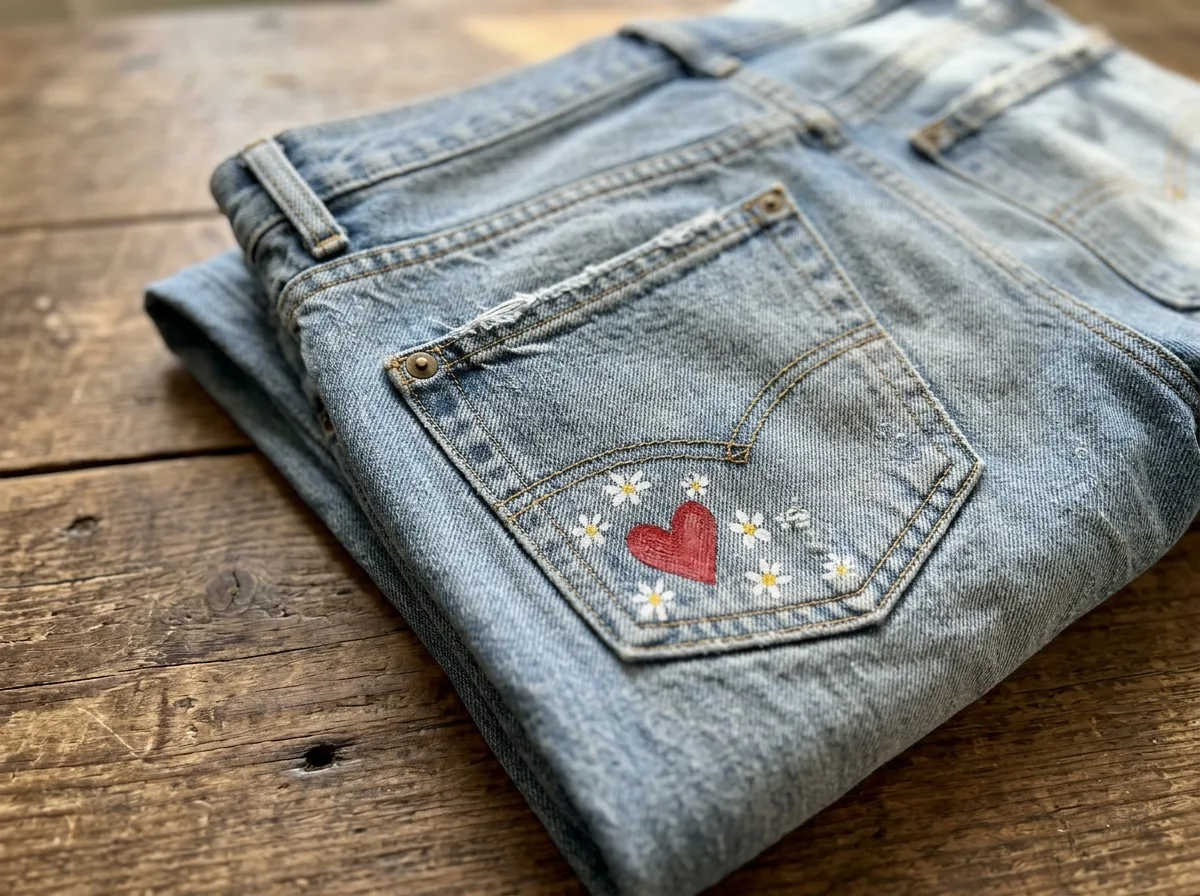
For a first project, choose something small and forgiving. Back-pocket hearts or smiley faces are contained and quick. Daisies down one leg are just five petals and a dot repeated, and they look intentional even when slightly uneven. Painted stripes at the hem let painter’s tape do the precision work, and a taped checkerboard patch is similar. Your initials or a short word, sketched in chalk and traced with a liner brush, make a pair feel personal.
Fixing Common Painted Jeans Problems
If the colors look dull or blue-tinted, the denim is showing through. Let the paint dry, add a white base layer under the color and repaint. If the paint cracked at the knee, it was probably too thick, had no fabric medium, or sits on a high-bend spot; touch it up with thin, medium-mixed paint, heat-set again, and keep future designs away from the back of the knee.
Paint that feels stiff usually went on in thick layers. A few gentle washes will soften it, and next time you can thin the paint slightly with medium and build color slowly. If paint bled through to the back, it is permanent once dry, so cover it with a matching color or work it into the design, and always keep cardboard inside the leg while painting.
Frequently Asked Questions
Can you use regular acrylic paint on jeans?
Yes, but mix it with fabric medium, about 1:1 to start. Plain acrylic dries hard and tends to crack on denim.
How long does paint take to dry on jeans?
Thin layers are usually dry to the touch in one to four hours. Wait about 24 hours before heat-setting and 72 hours before washing.
Will painted jeans wash out?
Not if the paint is fabric-grade or mixed with medium, fully dried and heat-set. Wash cold and inside out to keep the color bright.
Do I need to pre-wash jeans before painting?
Yes. Pre-washing removes factory sizing that blocks paint from bonding. Skip fabric softener during that wash.
The Bottom Line
Painted jeans last when you prep the denim, keep the paint flexible, build thin layers and heat-set before the first wash. Start small, perhaps with a back pocket, and once you see it survive a few washes you will want to paint more of your wardrobe. Next, try the same skills on a tee with our guide to using fabric paint on clothes.