
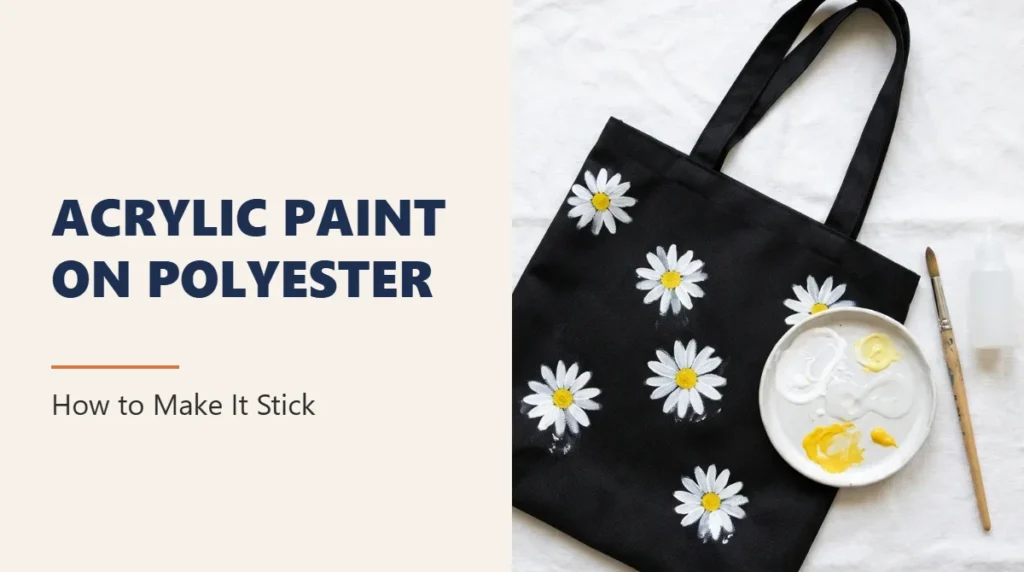
You found the perfect plain jacket, tote or sports top, checked the label, and saw the word you were hoping not to see: polyester. Can you still paint it with the acrylics you already have? You can. Polyester just plays by slightly different rules than cotton, and once you know them, the design can look great and survive normal wear.
This guide covers why polyester is tricky, what to mix into your paint, how to heat-set without melting the fabric, and how to fix the problems that usually show up on synthetics.
This post contains affiliate links. As an Amazon Associate I earn from qualifying purchases, at no extra cost to you.
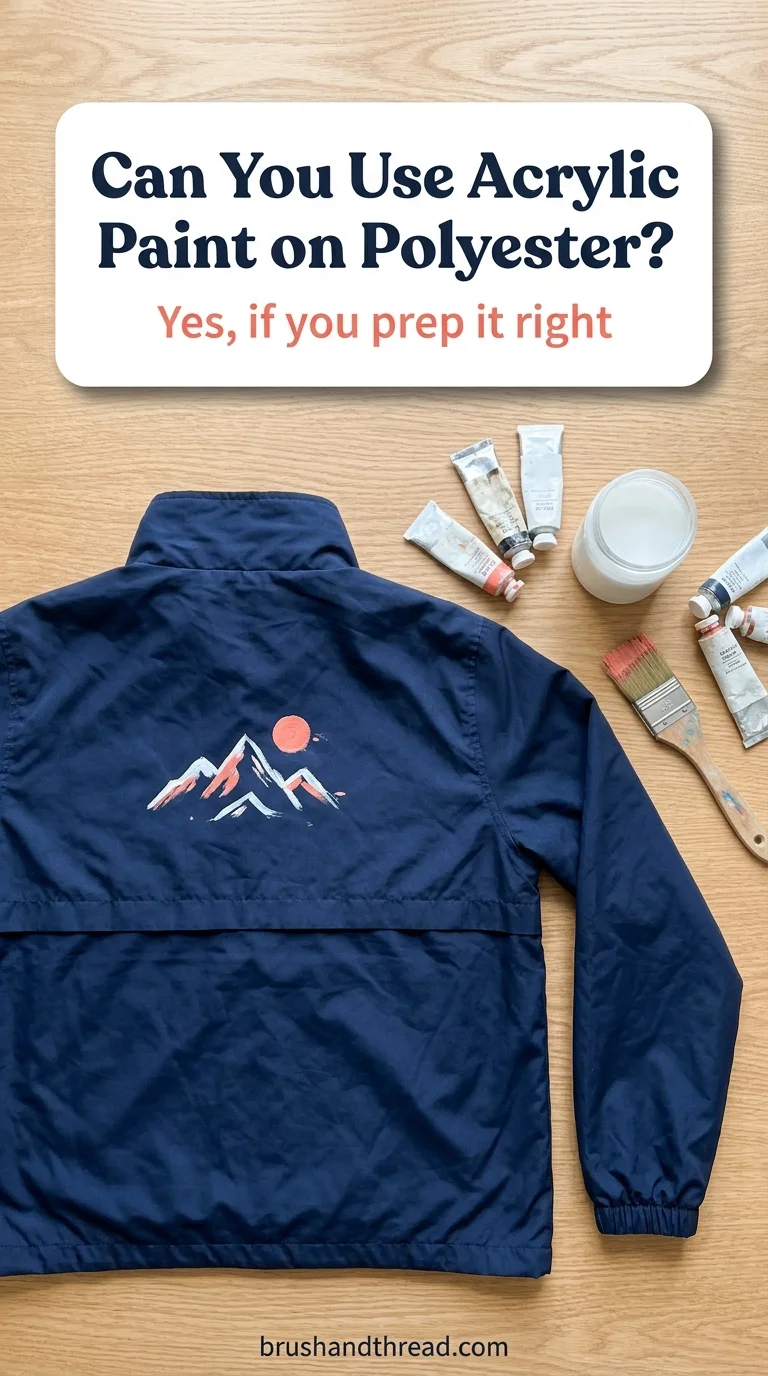
Why Polyester Is Harder to Paint Than Cotton
Cotton is a thirsty natural fiber. Paint soaks into it and grips the threads. Polyester is a smooth plastic fiber that absorbs very little water, so water-based acrylic mostly forms a film on the surface. That film is what cracks when the fabric bends, and what rubs off at seams and cuffs.
Polyester is also heat-sensitive. The hot cotton setting many tutorials recommend for heat-setting can leave shiny marks on polyester or even melt it. So the two big changes are: help the paint bond, and go gentler with heat.
| Fabric | How acrylic behaves | What to change |
|---|---|---|
| 100% cotton | Soaks in, bonds well | Standard method works |
| Cotton-poly blend (50/50 or more cotton) | Bonds fairly well | Use fabric medium, slightly lower iron heat |
| 100% polyester | Sits on top, can crack or peel | Fabric medium, thin layers, medium heat, test first |
| Polyester with spandex (stretchy activewear) | Cracks when stretched | Keep designs small, use a soft medium, low heat |
| Water-repellent or coated polyester | Often beads up and won’t stick | Test a hidden spot; may not be paintable |
If you’re still choosing a blank to paint, cotton will always be the easier, longer-lasting option. Our main guide to using acrylic paint on fabric covers the cotton method in full.
What You Need
- Acrylic paint (soft-body or craft acrylic is easier to thin than heavy body)
- Fabric medium, also called textile medium
- Synthetic brushes, a sponge dauber or stencils
- Cardboard or a plastic sheet to slip inside the garment
- Rubbing alcohol and a cotton pad (optional, for wiping the surface)
- An iron and a thin cotton pressing cloth
Step 1: Check the Label and Test a Hidden Spot
Look for the fiber mix and the ironing symbol on the care label. A one-dot iron symbol means low heat only, and a crossed-out iron means you shouldn’t heat-set with an iron at all. Then dab a little mixed paint on an inside seam allowance or hem. If it beads up like water on a raincoat, the fabric has a coating and paint won’t bond well.
Step 2: Wash It First, Without Fabric Softener
New polyester often carries finishing residue, and fabric softener leaves a waxy layer behind. Both make paint slide off. Wash the item with plain detergent, skip the softener and dryer sheets, and let it dry fully. For extra grip, you can wipe the area you’ll paint with a cotton pad dampened with rubbing alcohol and let it evaporate.
Step 3: Mix the Acrylic with Fabric Medium
This is the step that matters most on polyester. Fabric medium keeps the dried paint flexible and helps it hold onto the fibers. Follow the ratio on your bottle. Golden, for example, suggests starting at 1 part paint to 1 part GAC 900, and many craft mediums use about 2 parts paint to 1 part medium. Stir it well; don’t add water to thin it, because extra water weakens the bond.
Step 4: Paint Thin Layers, Not One Thick Coat
Slide cardboard inside the garment so paint can’t soak through to the back. Work the first layer into the weave with a slightly stiff brush or a dabbing motion. It will look patchy, and that’s fine. Let each layer dry to the touch (usually 15 to 30 minutes) before the next. Two or three thin layers flex with the fabric; one thick layer cracks.
Painting a dark polyester jacket? Lay down a thin white or light base layer under bright colors, the same trick we use for painting dark denim.
Step 5: Let It Dry for About 24 Hours
Paint on polyester can feel dry in an hour, but give it about 24 hours before heat-setting so the layers underneath are dry too. Our fabric paint drying time guide explains the difference between dry to the touch and fully cured.
Step 6: Heat-Set Gently
Turn off the steam. Place a thin cotton cloth over the design and iron with the iron moving constantly. Start on the lowest setting your label allows and test on the hidden spot first. Golden’s fabric guide lists polyester as moderately heat-sensitive with a starting point of about 150°C (302°F) for 1 to 2 minutes, and delicate synthetics like nylon and spandex at about 110°C (230°F) for 3 to 5 minutes.
| Fabric | Iron setting to start with | Approx. time |
|---|---|---|
| Polyester, poly-cotton blends | Medium / synthetic (about 150°C / 302°F) | 1 to 2 minutes |
| Nylon, spandex, Lycra blends | Low (about 110°C / 230°F) | 3 to 5 minutes |
| Label shows a crossed-out iron | Don’t iron; air cure only | Expect lower wash durability |
If you see shine, a sticky feel or the fabric starts to pucker, stop and lower the heat. Always check your own paint and medium labels, since heat-setting instructions vary by brand.
Step 7: Wait 72 Hours, Then Wash Cold
Hold off on washing for at least 72 hours after painting. Then turn the item inside out, wash cold on a gentle cycle, and line dry. Polyester dries fast anyway, so skipping the dryer costs you nothing. Our full guide on how to wash clothes with fabric paint walks through every step of the first wash.
Common Problems on Polyester (and How to Fix Them)
| Problem | Likely cause | Fix |
|---|---|---|
| Paint beads up or looks streaky | Softener residue or a water-repellent coating | Rewash without softener, wipe with rubbing alcohol, test again |
| Design cracks when bent | Layers too thick, or no fabric medium | Paint thin layers with medium; on stretchy fabric keep designs small |
| Paint peels at edges | Paint sat on top instead of bonding | Work the first layer into the weave; heat-set before washing |
| Shiny or melted patch | Iron too hot or no pressing cloth | Can’t be undone; always test heat on a hidden spot |
| Design fades fast | Hot washes or the dryer | Wash cold, inside out, line dry |
FAQ
Will acrylic paint stick to polyester without fabric medium?
It will stick at first, but plain acrylic dries stiff on polyester and is likely to crack or peel once the item is worn and washed. For decor that never gets washed, plain acrylic is fine. For clothes and bags, use a fabric medium.
Is acrylic paint waterproof on polyester?
Once fully dry and heat-set, acrylic is water-resistant and handles rain or a cold wash. It isn’t fully permanent on polyester the way it can be on cotton, so expect some gradual wear over many washes.
Can I use regular fabric paint on polyester instead?
Yes. Many fabric paints list synthetics and blends on the label, and they’re already flexible, so you skip the mixing step. Check the label for polyester and follow its heat-setting directions. Our guide on how to use fabric paint on clothes covers the basics.
Can you paint polyester shoes or backpacks with acrylic?
Yes, and they’re often easier than clothes because they bend less. Use the same thin-layer method with fabric medium. Skip heat on foam, rubber or coated parts and let those air cure instead.
How do I keep my brushes from getting ruined?
Fabric medium dries hard in bristles just like acrylic. Rinse brushes as soon as you finish; here’s how to clean acrylic paint brushes step by step.
Polyester is a kind of plastic, so the same grip problem shows up on hard plastic items too. See how to make acrylic paint stick to plastic.
Can you put an acrylic top coat on painted polyester?
Yes. Once the paint has dried and been heat-set, a thin layer of fabric medium or a soft, flexible clear fabric finish can protect it. Avoid hard varnishes or spray sealers made for wood, because they crack when the fabric bends and make the area stiff.
The Bottom Line
Acrylic paint works on polyester when you help it grip and go easy on the heat. Wash out softener, mix in fabric medium, paint thin layers, dry for about 24 hours, heat-set on a medium or synthetic setting after testing, and wait 72 hours before a cold, inside-out wash. Want something simple to try it on? Pick a small design from our easy fabric painting ideas.