
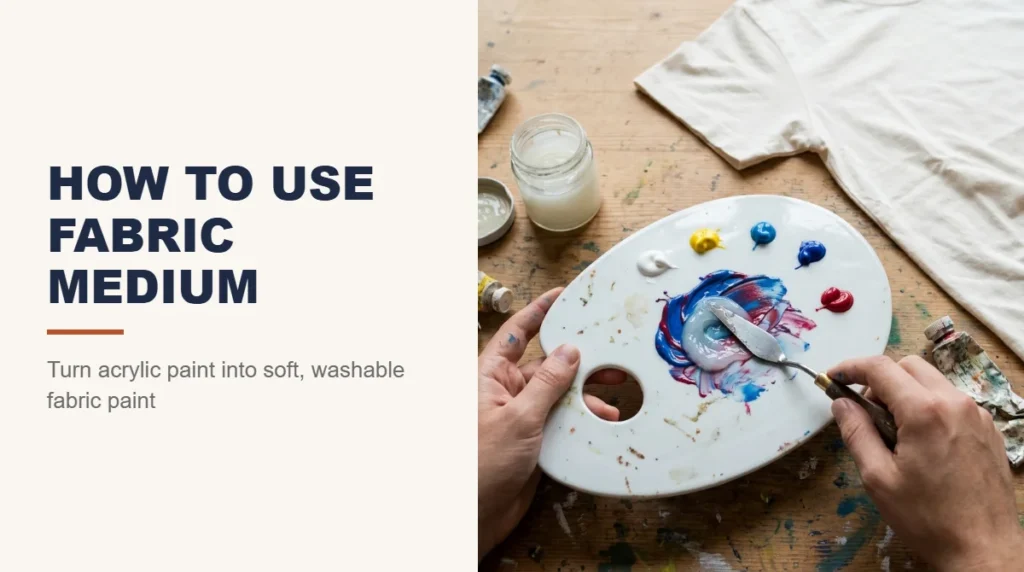
You have a shelf full of acrylic paint and a plain shirt you want to decorate, but you have also heard that regular acrylic dries stiff on clothes and can crack after a few washes. A small bottle of fabric medium is the simple fix. It thins the paint, helps it soak into the fibers and keeps the finished design softer and more flexible.
This guide covers what fabric medium actually does, the ratios most bottles recommend, how to mix and apply it, how to heat set the result, and the mistakes that usually cause stiff or cracked designs. If you are still deciding whether acrylic is right for your project at all, start with our guide on whether you can use acrylic paint on fabric.
This post contains affiliate links. As an Amazon Associate I earn from qualifying purchases, at no extra cost to you.
What Fabric Medium Does
Acrylic paint is pigment held in an acrylic polymer binder (you can read more about how it works on Wikipedia’s acrylic paint page). On canvas, that binder forms a firm film, which is exactly what you want on a painting and exactly what you do not want on a shirt that bends, stretches and goes through the washing machine.
Fabric medium (also sold as textile medium) is a clear liquid you stir into the paint. It loosens the paint so it flows into the weave instead of sitting on top, and it changes how the dried film behaves so it stays more flexible. The result feels closer to real fabric paint: softer to the touch, less likely to crack when the fabric moves, and better at handling gentle washing once it has been heat set.
It is not magic, though. Fabric medium cannot make paint stick to a fabric with a water repellent coating, and it will not save a design that was never heat set. Think of it as one part of a process that also includes good preparation, thin layers and proper curing.
The Right Ratio of Fabric Medium to Acrylic Paint
There is no single ratio that every brand uses, which is why the label on your bottle should always win. In practice, most fabric mediums fall into one of two instructions, and the table below shows how each one feels on fabric.
| Mix | Common use | What to expect |
|---|---|---|
| 1 part medium to 1 part paint | The most common instruction on fabric medium bottles | Soft, flexible finish; colors look slightly lighter and may need a second coat |
| 1 part medium to 2 parts paint | Used by some brands, and for bolder color | Stronger color, a little stiffer, still far better than plain acrylic |
| Paint with no medium | Not recommended for clothes | Stiff film that is more likely to crack and fade in the wash |
If your bottle gives no ratio, start with equal parts and test on a scrap of the same fabric. Mix only as much as you will use in one session, because the mixture dries on the palette just like plain acrylic. Avoid adding extra water on top of the medium, since watering the paint down further weakens the binder that holds the color on the fabric.

What You Need
- Acrylic paint in the colors you want
- Fabric medium (textile medium)
- A palette or plate and a palette knife or old spoon for mixing
- Soft synthetic brushes in a few sizes
- A clean, prewashed cotton or cotton blend item
- A piece of cardboard to slide inside the garment
- An iron and a thin cotton press cloth for heat setting
Natural fibers like cotton, linen and canvas absorb the mixture best. Blends work well too. Slick synthetics need a little more preparation, which we cover in our guide to using acrylic paint on polyester.
How to Mix and Paint with Fabric Medium, Step by Step
- Wash and dry the fabric first without fabric softener. New fabric often has sizing on it that stops paint from soaking in, and softener leaves a coating that does the same.
- Iron the area flat and slide cardboard inside the garment so paint cannot bleed through to the back.
- Measure the paint and medium onto your palette using the ratio from your bottle, and stir slowly until there are no streaks. Stirring slowly keeps air bubbles out.
- Test on a scrap or an inside seam to check the color and how far the mixture spreads.
- Paint in thin layers. Work the paint into the weave with the brush instead of piling it on top. Let each layer dry to the touch before adding the next.
- Let the item dry flat for about 24 hours in a room with good air flow.
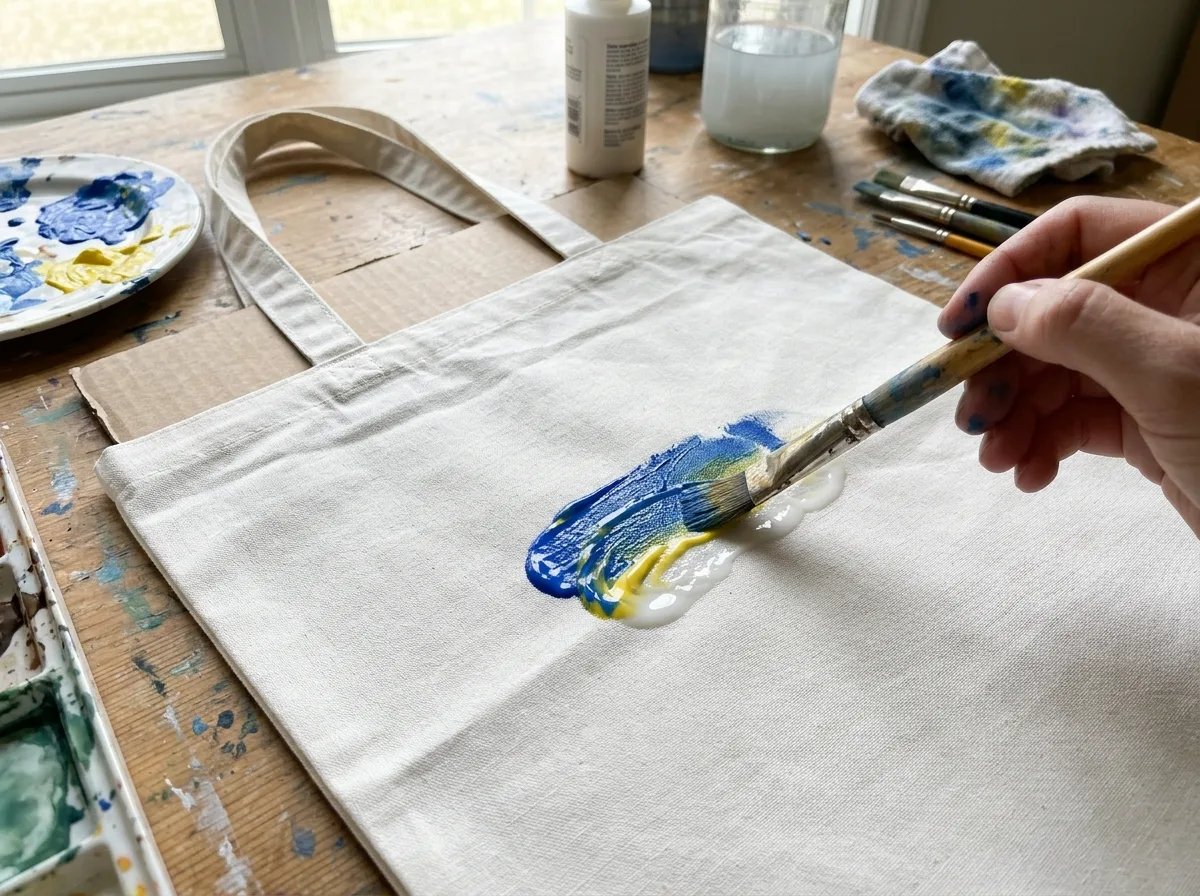
Thin layers matter more than most beginners expect. A thick coat may look bright on day one, but it is the part of the design most likely to crack, because it cannot bend with the fabric. Two thin coats almost always last longer than one heavy coat.
Heat Setting the Finished Design
Most fabric mediums need heat to cure fully. Once the paint has dried for about 24 hours, turn the item inside out or lay a cotton press cloth over the design. Iron it on a dry setting, with no steam, at the hottest temperature the fabric can handle, keeping the iron moving over each area for about 3 to 5 minutes. Our full guide on how to heat set fabric paint explains the iron, dryer and oven methods in detail.
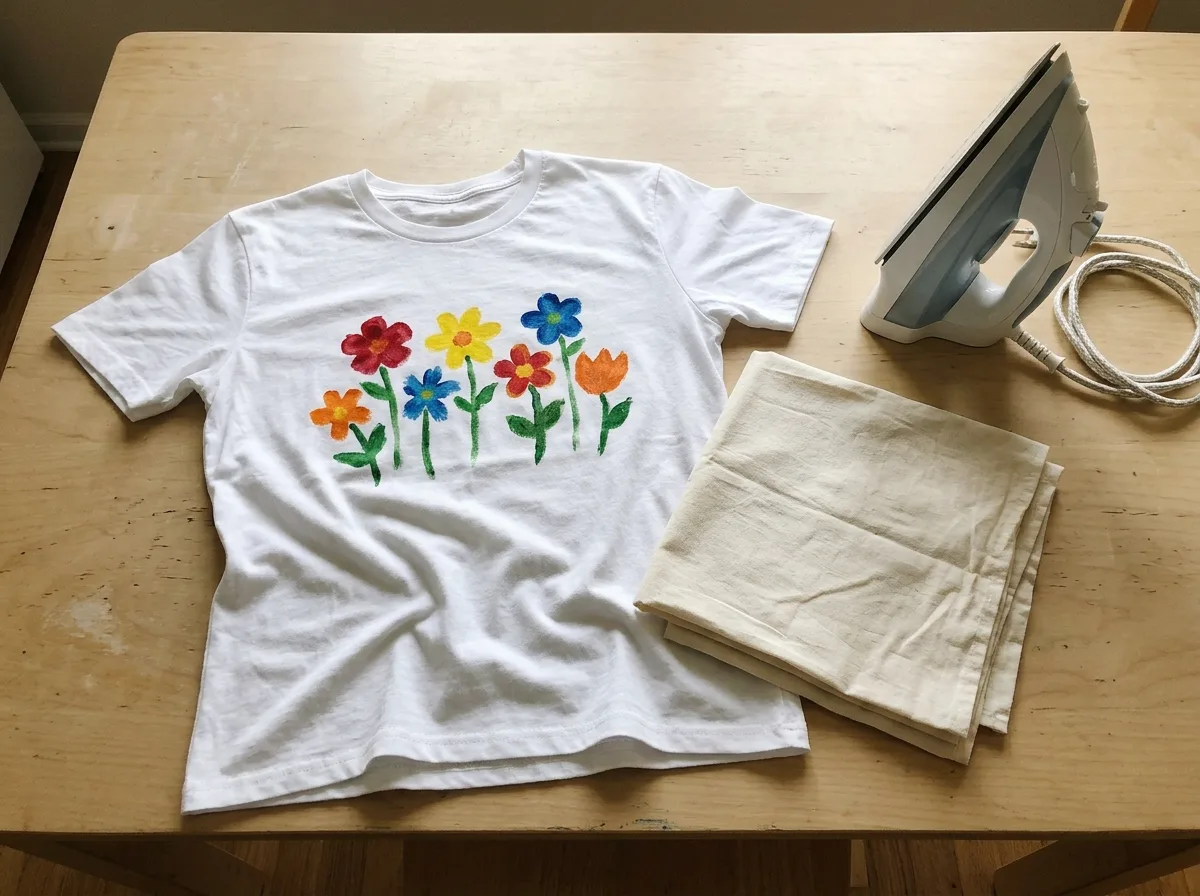
After heat setting, wait about 72 hours from the day you painted before the first wash. Then wash the item inside out in cold water on a gentle cycle. Our guide on how to wash clothes with fabric paint has the full care routine.
Fabric Medium vs Ready Made Fabric Paint
Ready made fabric paint already contains a flexible binder, so it needs no mixing and gives very consistent results. It is the easiest choice if you are buying supplies from scratch for clothing projects.
Fabric medium makes more sense when you already own acrylic paint, want a wider range of colors than fabric paint sets offer, or paint on both canvas and fabric. One bottle of medium can turn a whole collection of acrylics into usable fabric paint. The trade off is that you have to mix carefully and test, while ready made fabric paint is consistent straight from the bottle.
Common Mistakes to Avoid
- Skipping the prewash. Sizing on new fabric is one of the most common reasons paint peels off later.
- Using too little medium. If the dried paint feels hard and plasticky, the mix had too much paint. Test the ratio on a scrap next time.
- Adding water instead of medium. Water thins the paint but also weakens it, so the color fades faster.
- Painting thick layers. Heavy paint cracks. Build color in thin coats.
- Washing too soon. Give the paint time to dry, heat set it, and wait about 72 hours before washing.
If the paint does end up somewhere you did not want it, act quickly while it is still wet. Our guide on how to remove fabric paint covers both wet and dried paint.
FAQ
Can I use acrylic paint on fabric without fabric medium?
You can, but the paint will usually dry stiffer and is more likely to crack or fade in the wash. For anything you plan to wear or wash, fabric medium or ready made fabric paint gives a much better result.
Does fabric medium make acrylic paint washable?
It helps a lot, but only together with heat setting and gentle washing. Let the paint dry for about 24 hours, heat set it, wait about 72 hours, and then wash inside out in cold water.
Can I make my own fabric medium?
Homemade mixes using glycerin or glue are shared online, but results vary and some leave the design sticky or weak. A store bought fabric medium is designed to work with acrylic binder, so it is the more reliable choice.
How long does acrylic paint with fabric medium take to dry?
It is usually dry to the touch within a few hours, but it needs about 24 hours before heat setting. Our guide on how long fabric paint takes to dry explains each stage.
The Bottom Line
Fabric medium is the easiest way to turn the acrylic paint you already own into something that works on clothes. Mix it in the ratio your bottle recommends (often equal parts), paint thin layers on clean prewashed fabric, let it dry for about 24 hours, heat set it with a dry iron, and wait about 72 hours before the first wash. Looking for something to paint first? Browse our easy fabric painting ideas for beginners.