If you have acrylic paint on hand and want to use it on a fabric project, you’re likely wondering three things: will it actually stick, is it suitable for fabric in the first place, and will it hold up after washing. The answer to all three is yes, provided you follow a few key steps during application and care.
This guide explains how well acrylic paint bonds with fabric, how to apply it correctly, what to consider when working with polyester, and how to wash the finished piece so the design lasts.
Will Acrylic Paint Stick to Fabric?
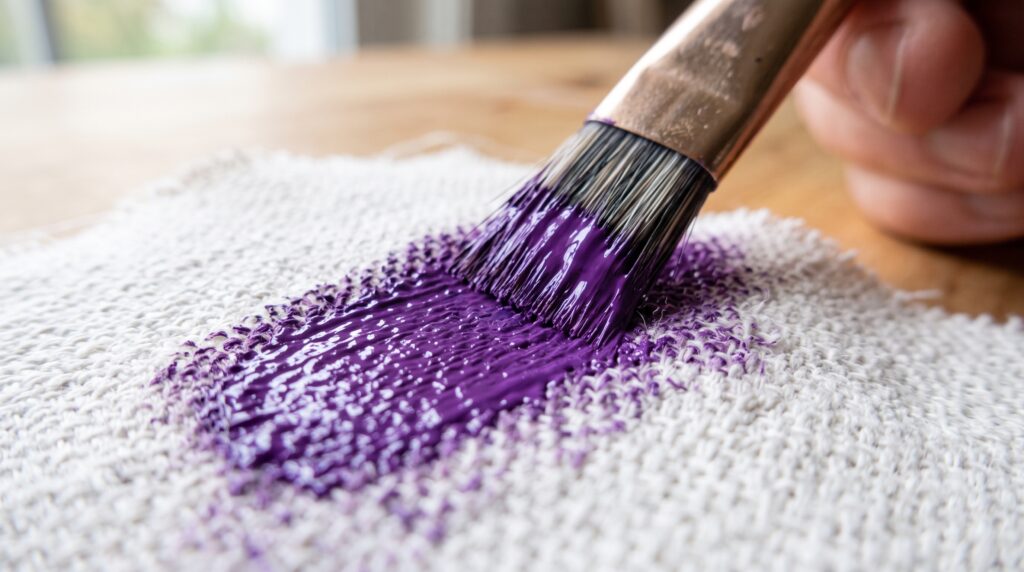
Yes, acrylic paint will stick to fabric. It’s a versatile, water-based paint that adheres to most porous surfaces, and fabric is no exception. Once it dries, acrylic paint forms a flexible plastic-like film on top of the fibers.
That said, “sticking” and “lasting” are two different things. Straight out of the bottle, acrylic paint can feel stiff and slightly crack or peel after repeated washing, especially on fabric that stretches or bends a lot. This is why most people who paint on fabric regularly mix in a fabric medium, a liquid additive that softens the paint, helps it bond with fibers more deeply, and keeps the final result flexible instead of crusty.
Is Acrylic Paint Good for Fabric?
It can be, with the right approach. Here’s how acrylic compares to dedicated fabric paint:
Pros of using acrylic paint on fabric:
- Already comes in a huge range of colors and finishes
- Often cheaper than buying fabric paint separately
- Works well for detailed designs since it doesn’t bleed easily
- Mixing in fabric medium gives results very close to true fabric paint
Cons of using acrylic paint on fabric:
- Without fabric medium, it can feel stiff or crack over time
- Heavier coverage than fabric paint, which can make designs feel less breathable on clothing
- Needs heat-setting (ironing) to hold up properly in the wash
If you’re doing a one-off project (a tote bag, a canvas shoe, a denim patch), straight acrylic paint is often fine. For something you’ll wear and wash often, like a t-shirt, mixing in fabric medium is the better call.
Painting on Material With Acrylic Paint: What to Know First
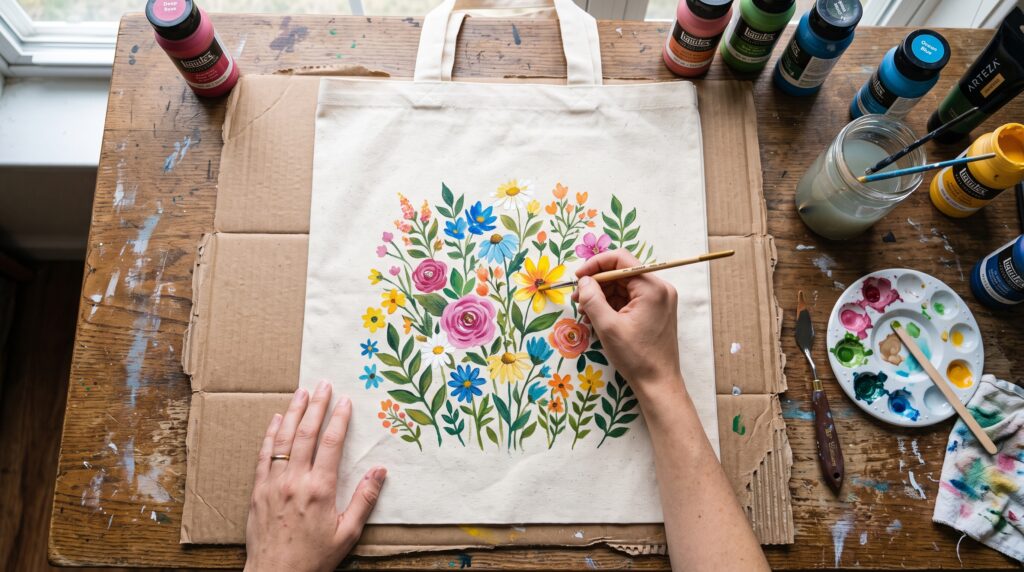
Before you start, a few things make a real difference in how the final piece turns out:
1. Pick the right fabric. Natural fibers like cotton, canvas, and linen absorb acrylic paint well and give the best results. Stretchy or slick synthetic fabrics are trickier (more on polyester below).
2. Wash and dry the fabric first. New fabric often has a finishing coating that can stop paint from bonding properly. A quick wash without fabric softener removes this and gives the paint a cleaner surface to grip.
3. Use a barrier underneath. Slip cardboard, wax paper, or a plastic sheet inside the garment (between the front and back layers) so paint doesn’t bleed through to the other side.
4. Mix in fabric medium if the piece will be worn or washed often. A typical ratio is about 2 parts acrylic paint to 1 part fabric medium, though it’s worth checking the specific product’s instructions since ratios vary slightly by brand.
5. Heat-set once fully dry. Turn the fabric inside out and iron over the design (on a medium setting, with a thin cloth in between) for about 30 seconds to lock the paint in.
Read More: Acrylic Painting on Fabric
Is a Polyester Shirt Bad to Fabric Paint On?

Polyester is the trickiest common fabric to paint on, whether you’re using acrylic or dedicated fabric paint. Here’s why:
- Polyester is a tightly woven synthetic fiber, so it doesn’t absorb paint the way cotton does; the paint mostly sits on top.
- This makes the design more prone to cracking, peeling, or rubbing off, especially in areas that flex or stretch.
- Polyester also reacts differently to heat. Standard heat-setting temperatures that work fine on cotton can sometimes scorch or melt polyester.
It’s not impossible to paint on polyester, but it takes a different approach:
- Use a fabric medium specifically labeled safe for synthetic fabrics
- Apply thin layers rather than one thick coat
- Test heat-setting on a low setting first, or use a lower heat with a longer dwell time, and always test on a hidden corner of the fabric before doing the whole design
- Expect the design to be less wash-durable over time compared to cotton
If you have a choice, cotton or cotton-blend fabric will always give a more reliable, longer-lasting result than 100% polyester.
How to Use Fabric Paint (Quick Step-by-Step)
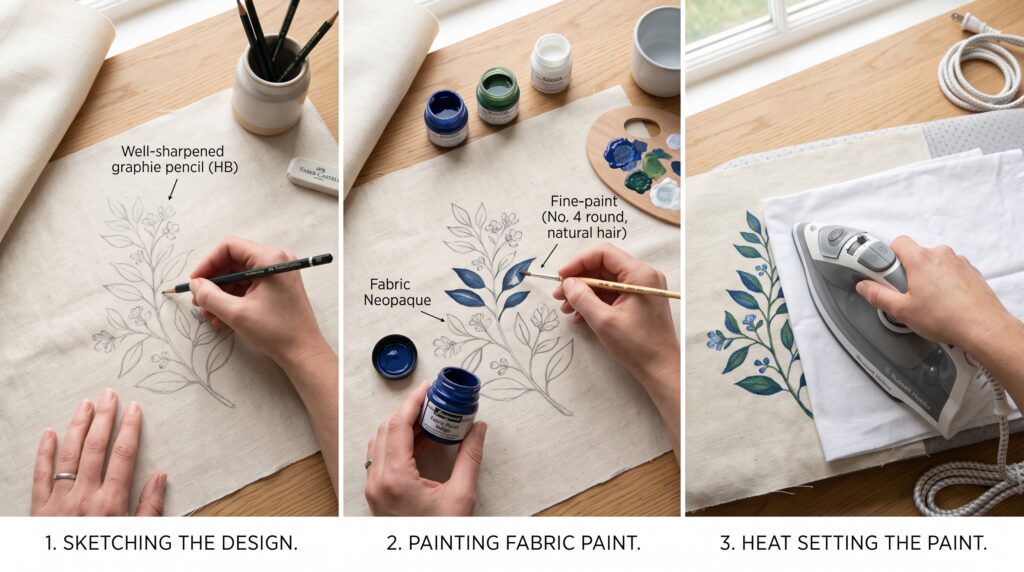
Whether you’re using real fabric paint or acrylic with fabric medium, the basic process is the same:
- Wash and dry the fabric to remove any finishing residue.
- Lay it flat on a hard, protected surface, with a barrier sheet inside if it’s a garment.
- Sketch your design lightly with a pencil or fabric-safe marker if needed.
- Mix your paint with fabric medium (if using acrylic) according to the product ratio.
- Apply in thin, even layers, letting each layer dry before adding more if you’re layering colors.
- Let it dry fully, at least a few hours, ideally overnight for best results.
- Heat-set with an iron once completely dry, following the temperature guidance for your specific fabric.
- Wait 24–72 hours before the first wash to let the paint fully cure.
How to Wash Fabric-Painted Clothes
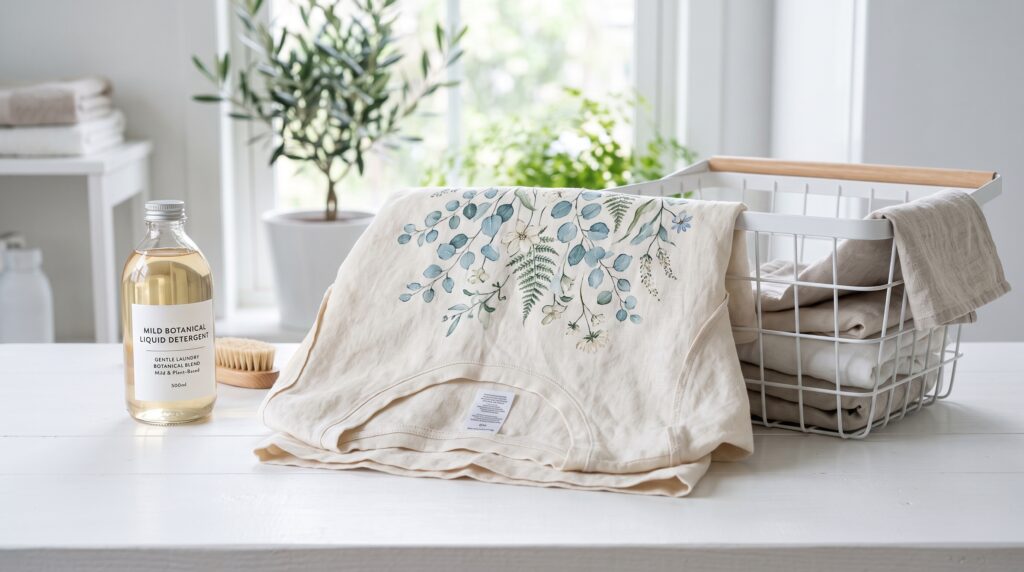
Once the design is cured, a little extra care keeps it looking good for much longer:
- Turn the garment inside out before every wash
- Use cold water, since heat speeds up wear on the paint
- Skip fabric softener and bleach, both of which weaken the paint’s bond
- Air dry when possible, or use a low-heat dryer setting
- Avoid scrubbing or wringing the painted area directly
Final Thoughts
Acrylic paint absolutely can be used on fabric, and for a lot of projects it works just as well as dedicated fabric paint, as long as you account for flexibility and durability with a fabric medium. The fabric you’re working with matters just as much as the paint itself: cotton is forgiving, polyester needs extra care, and proper heat-setting is what really determines whether your design survives the wash or fades after one wear.