

The best fabric for fabric painting is the one that lets paint soak into the fibers instead of sitting on top. When the paint can grip the threads, your design stays soft, bends with the fabric and survives the washing machine. When it cannot, the same paint cracks, peels or fades after a few washes, even if you did everything else right.
This guide walks through the fabrics that take paint well, the ones that fight you, and how to prepare any fabric so the paint lasts. If you are still choosing a first project, it pairs well with our list of easy fabric painting ideas for beginners.
This post contains affiliate links. As an Amazon Associate I earn from qualifying purchases, at no extra cost to you.
Why the Fabric Matters More Than the Paint
Fabric paint is basically pigment in a flexible binder. To stay put, that binder has to wrap around the fibers and lock into the small gaps between threads. Natural plant fibers such as cotton and linen are absorbent, so the binder sinks in and bonds as it dries. That is why a cheap paint on good cotton often lasts longer than an expensive paint on the wrong fabric.
Synthetic fibers such as polyester, nylon and acrylic are made from plastics. They absorb very little liquid, so most of the paint stays on the surface. It can still look fine at first, but it has less to hold on to, and the first hot wash or hard bend can lift it. Knowing this before you start saves a lot of disappointment.
Weave and texture matter too. A tight, smooth weave gives you crisp edges and clean lines. A loose or fluffy weave lets paint spread into the gaps, so fine details blur. Thick piles like terry cloth or fleece swallow paint and leave a patchy look, so they are best saved for later projects.
The Best Fabrics for Fabric Painting
If you want your first project to succeed, choose one of these. They are listed roughly from easiest to slightly more demanding.
| Fabric | How it takes paint | Best for | Watch out for |
|---|---|---|---|
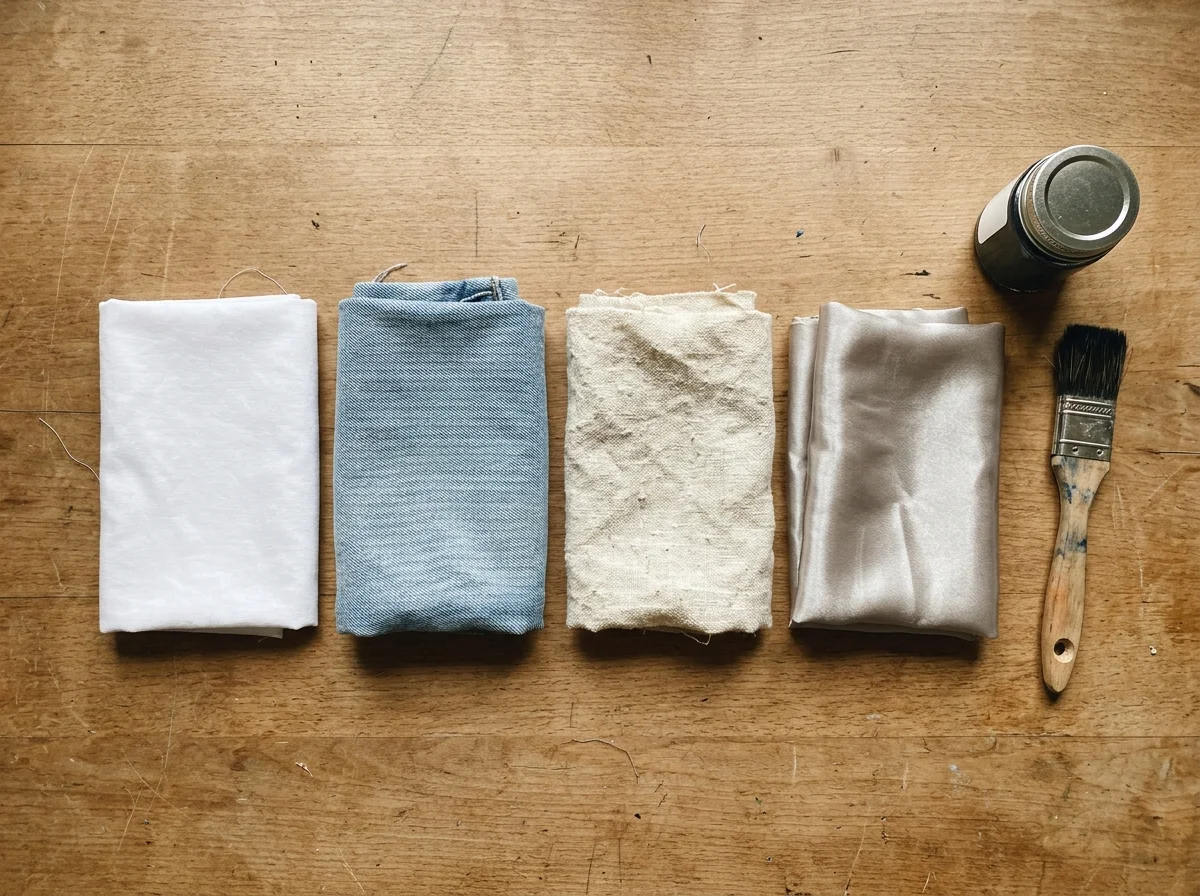
| 100% cotton (T-shirts, tote bags, canvas) | Absorbs paint evenly, very good grip | First projects, shirts, bags | New cotton has sizing, so prewash it |
| Cotton blends (at least 50% cotton) | Good, slightly less absorbent | Everyday clothes | The more polyester, the more it behaves like a synthetic |
| Linen | Absorbs well, shows brush texture | Napkins, tea towels, cushion covers | Slubby texture can break fine lines |
| Denim | Very good grip, needs more paint | Jackets, jeans, bags | Dark denim needs opaque paint or a white base |
| Silk | Takes thin paint and silk paints beautifully | Scarves | Thick fabric paint stiffens it; use silk paint |
| Polyester and nylon | Paint sits on top | Sportswear, cheap tees | Needs a synthetic-friendly paint and low heat |
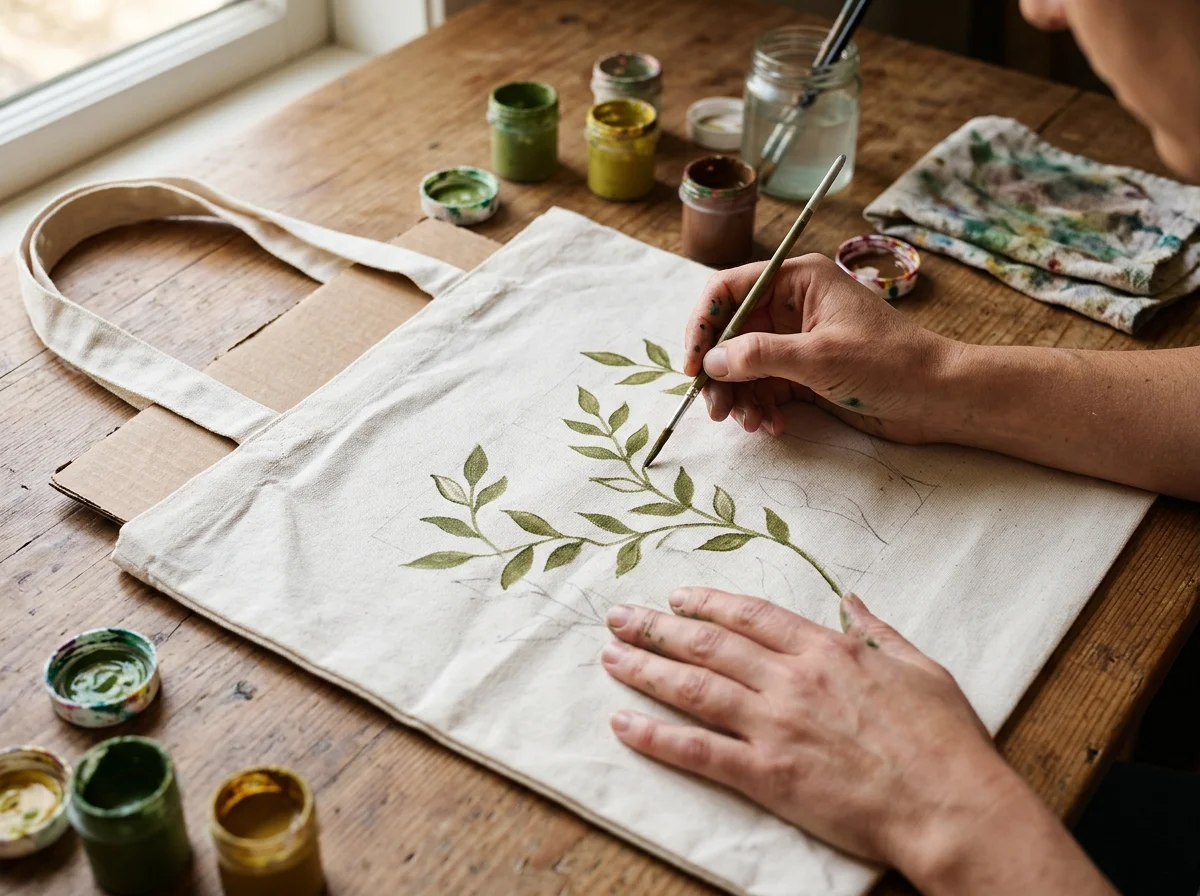
Plain cotton is the safest starting point by a wide margin. A basic white cotton T-shirt or a canvas tote is cheap, easy to find and shows your colors exactly as they look in the pot. A good beginner kit for these fabrics is simply a small fabric paint set, a couple of flat brushes and a piece of cardboard.
Denim deserves a special mention. It is woven tightly from cotton, so paint grips it very well, but the indigo color shows through thin or transparent paints. On dark denim, use opaque paint or lay down a thin white base layer first. Our guide on how to paint jeans so the design never cracks covers that step by step.
Fabrics That Are Harder to Paint
Polyester is the fabric most beginners run into, because so many cheap T-shirts and sports tops are made from it. You can paint it, but you need to work differently. Use paint labelled for synthetics, or mix acrylic paint with a fabric medium, apply thin layers and heat-set with care. We explain the whole process in can you use acrylic paint on polyester.
Stretchy knits such as spandex blends and leggings are hard for a different reason. Every time the fabric stretches, the dried paint stretches with it, and thick paint will crack. If you must paint stretch fabric, choose a soft, flexible fabric paint, keep layers thin, and paint the garment while it is lying flat and relaxed, not pulled tight.
Fluffy and textured fabrics such as fleece, velvet, terry cloth and faux fur are the least forgiving. Paint flattens the pile and dries into a stiff patch. They can be decorated, but it is better to start with something smooth and come back to them once you know how your paints behave.
Water-resistant and coated fabrics, like rain jackets or anything with a stain-resistant finish, are designed to repel liquid. Paint beads up and peels off later. Unless the paint is made for that surface, skip them.
How to Check What Your Fabric Is Made Of
The easiest way is to read the care label. It lists the fiber content, such as “100% cotton” or “60% cotton, 40% polyester”. As a simple rule, the higher the cotton or linen percentage, the easier the painting. A blend with at least half natural fiber usually behaves well.
If there is no label, look and feel. Cotton feels soft and slightly matte and wrinkles easily. Polyester often has a faint sheen, feels slippery or cool and springs back without wrinkling. You can also drop a little water on a hidden spot: cotton darkens and absorbs it within seconds, while many synthetics let it sit as a bead for longer.
Whatever you find, do a small test on a seam allowance or an inside hem before painting the front. Let the test dry, heat-set it, then rub and bend it. If it flakes or feels like a plastic sticker, change the paint or the fabric before you commit to the full design.
How to Prepare Fabric Before Painting
Preparation is where most painted clothes are won or lost. New fabric is usually treated with sizing, a light finish that makes it look crisp in the shop. Sizing acts like a barrier between paint and fibers, so sizing needs to come out before you paint.
- Wash the item in warm water with a normal detergent.
- Skip fabric softener and dryer sheets, because they leave a slick coating that stops paint from bonding.
- Dry it fully, then iron it smooth so the paint goes on evenly.
- Slide cardboard or a plastic-covered board inside shirts and bags so paint does not soak through to the back.
- Tape or pin the fabric flat so it cannot shift while you work.
The fabric softener step is the one people forget most often. Fabric softener works by coating fibers with a thin layer that makes them feel smooth, which is exactly what you do not want under paint. If the item was washed with softener before, run it through one more plain wash.
Light vs Dark Fabric: Choosing the Right Paint
The color of the fabric changes how your paint looks. On white or light fabric, almost any fabric paint shows true, and even transparent paints look bright. That makes light cotton the most forgiving choice while you are learning.
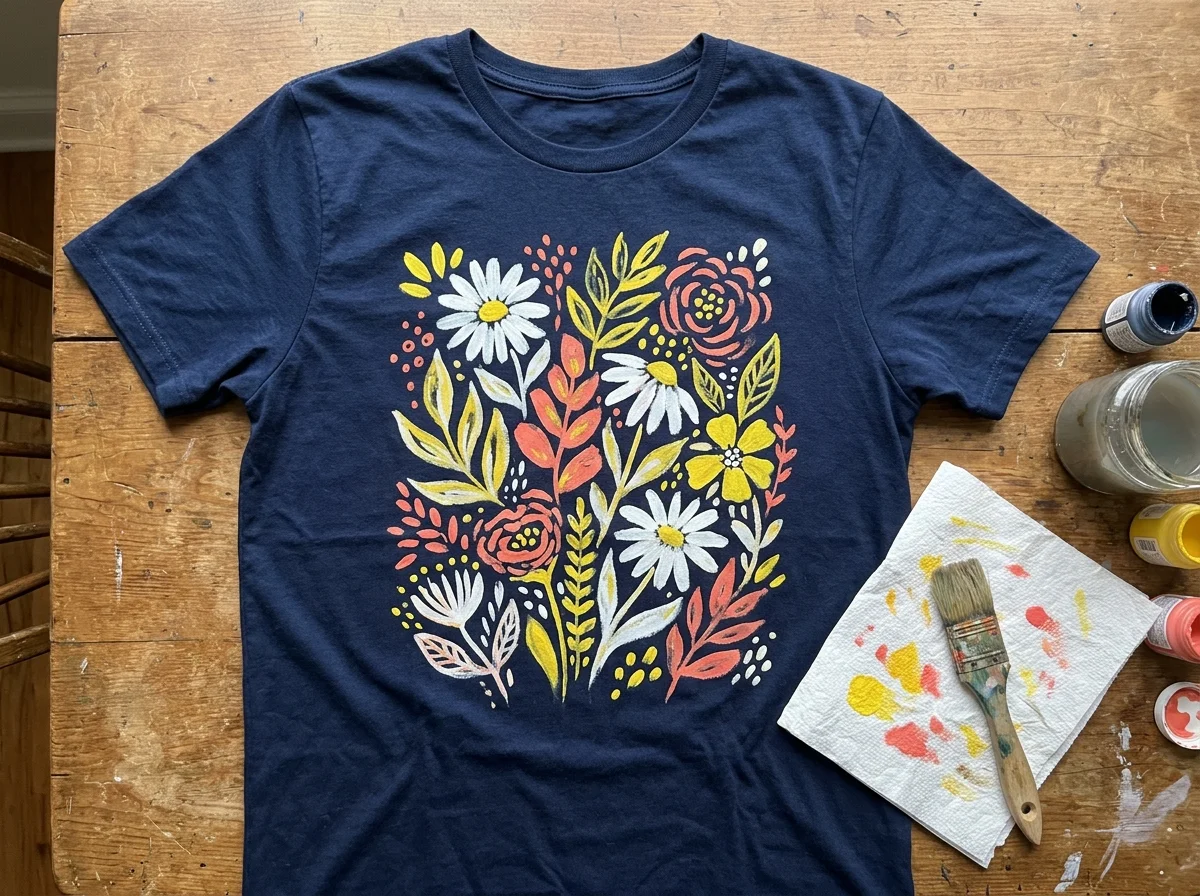
Dark fabric absorbs light, so transparent paints almost disappear on it. For black, navy or dark denim, use paints labelled opaque, or paint the design in white first, let it dry, and then add color on top. This takes a little longer but gives much brighter results.
If you prefer to use regular acrylic paint, mixing it with fabric medium keeps it softer and helps it bond to the fibers. Our guide on how to use fabric medium with acrylic paint explains the ratio and the steps.
Making the Paint Last on Any Fabric
Even on perfect cotton, paint needs time and heat to become fully permanent. Let the design dry for about 24 hours, then heat-set it with an iron, a dryer or an oven as your paint label allows. The heat helps the binder cure and grip the fibers. Our full guide to heat setting fabric paint covers each method and the right temperature for each fabric.
For polyester and other synthetics, keep the iron at the setting that fabric allows and press through a cloth, because high heat can melt or shine the fibers. Cotton and linen can take a hotter iron.
After heat setting, wait about 72 hours before the first wash. Turn the item inside out, wash cold on a gentle cycle and air dry when you can. Our guide on how to wash clothes with fabric paint has the full routine.
Want to use the acrylics you already own? Our guide answers can you use acrylic paint on fabric and shows how to make it soft and washable.
Once you have picked your fabric, follow our step by step guide on how to use fabric paint on clothes to paint, dry and heat-set your design.
Frequently Asked Questions
What is the best fabric for fabric painting?
Smooth, tightly woven 100% cotton is the easiest and most reliable choice. Cotton blends with at least half cotton, linen and denim also take paint well.
Can you use fabric paint on polyester?
Yes, but it needs paint suited to synthetics or acrylic mixed with fabric medium, thin layers and careful, lower-heat setting. Expect it to be less durable than the same design on cotton.
Do I need to wash fabric before painting?
Yes. Washing removes sizing from new fabric, which otherwise blocks the paint. Wash without fabric softener and let it dry completely before you start.
What fabric should I avoid for fabric painting?
Beginners should avoid stretchy spandex blends, fleece, velvet, terry cloth and water-resistant coated fabrics. They either crack, flatten or repel the paint.
Want to use the acrylic paint you already have? Our guide to acrylic painting on fabric and clothes shows how to make it soft and washable.
The Bottom Line
Start with plain, prewashed cotton and you remove most of the things that can go wrong. Once you are happy with how your paint behaves, move on to linen and denim, and treat polyester and stretch fabrics as projects that need the right paint and a gentle hand. Test on a hidden spot, heat-set after about 24 hours, wait 72 hours before washing, and your painted fabric will look good for a long time.