
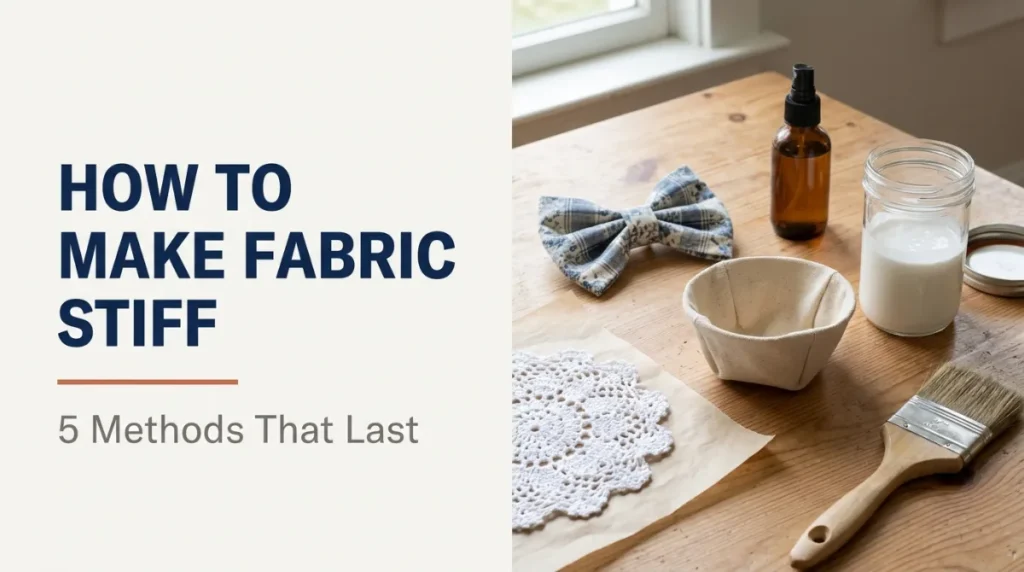
Maybe you want a fabric bow that holds its shape, a crochet snowflake that doesn’t flop, or a shirt collar that stays crisp all day. All of these come down to one question: how do you make fabric stiff, and how do you make it stay that way?
The answer depends on whether the item will ever be washed. Some methods are truly long-lasting but can’t go in the machine. Others survive washing but need to be sewn or fused in. Here are the five methods that work, how to use each one, and which to pick for your project.
This post contains affiliate links. As an Amazon Associate I earn from qualifying purchases, at no extra cost to you.
Permanent vs Temporary: Pick the Right Method First
“Permanent” means two different things for fabric. For a decoration, it means the piece holds its shape for years on a shelf or tree. For a garment, it means the stiffness survives the washing machine. No single product does both, so start by asking whether your item will be washed.
Glue-based stiffeners soak into the fibers and harden as they dry, which is why they last so well on decor. But water softens most of them again, so they’re a poor fit for clothes. Interfacing works the other way: it doesn’t change the fabric itself, it adds a stiff layer behind it, which is why it’s the standard choice in sewing for collars, cuffs, waistbands and bag panels.
| Method | How long it lasts | Washable? | Best for |
|---|---|---|---|
| Commercial fabric stiffener | Years | No | Bows, ornaments, doilies, fabric bowls |
| PVA glue and water | Years | No | Budget craft projects and crochet decor |
| Fusible or sew-in interfacing | Life of the item | Yes | Collars, cuffs, waistbands, bags, hats |
| Starch (spray or liquid) | Until the next wash | Washes out | Shirts, linens, quilting fabric before cutting |
| Sugar water or gelatin | Until damp or washed | Washes out | Quick temporary shaping |
Method 1: Commercial Fabric Stiffener
Ready-made fabric stiffeners are sold in craft stores as liquids or sprays. They’re designed for this exact job, so they dry clear, don’t yellow quickly and give a firm, even finish. They’re the easiest choice if you want reliable results on the first try.
- Cover your work surface with plastic wrap or parchment paper.
- Pour the stiffener into a bowl and fully soak the fabric or crochet piece, or brush it on generously.
- Gently squeeze out the excess so no drips or film sit in the holes.
- Shape it over a mold covered in plastic wrap (a bowl, a balloon, a foam ball) or pin it flat.
- Let it dry completely, usually 24 hours or more, then remove it from the mold.

Method 2: White Glue and Water
Ordinary white school glue or craft glue is a type of polyvinyl acetate (PVA), and mixed with water it becomes a cheap homemade stiffener. A 1:1 mix of glue and water is a good starting point. Use more glue for a harder finish, or more water for a softer, more flexible one.
Apply it the same way as a commercial stiffener: soak, squeeze, shape and dry. It dries clear on most fabrics, though it can leave a slight shine. Because it softens again if it gets wet, keep glue-stiffened pieces away from humid bathrooms and outdoor spaces. This method is popular for crochet ornaments and snowflakes. If you’re new to crochet, our crochet starter guide covers the basic stitches for small pieces like these.
Method 3: Interfacing (The Washable Permanent Fix)
Interfacing is a layer of fabric, fused or sewn to the wrong side of your fabric, that gives it body. It comes in light, medium and heavy weights, so you can choose anything from a gentle crispness for a blouse collar to a firm, almost cardboard-like feel for a bag base. Once fused or stitched in, it washes with the item for its whole life.
Fusible interfacing has glue dots on one side. Place it glue side down on the wrong side of the fabric, cover it with a damp press cloth and press (don’t slide) the iron for about 10 to 15 seconds per spot, following the product’s instructions. Sew-in interfacing is basted or stitched into the seams instead and is better for heat-sensitive fabrics. If you’re still learning machine basics, start with our guide to hand and machine sewing.
Interfacing can’t be added to a finished piece of crochet or a sewn garment without some unpicking, so it’s best planned before you cut and sew. For waistbands and ties, our easy apron pattern is a good first project to practice it on.
Method 4: Starch for Crisp but Temporary Stiffness
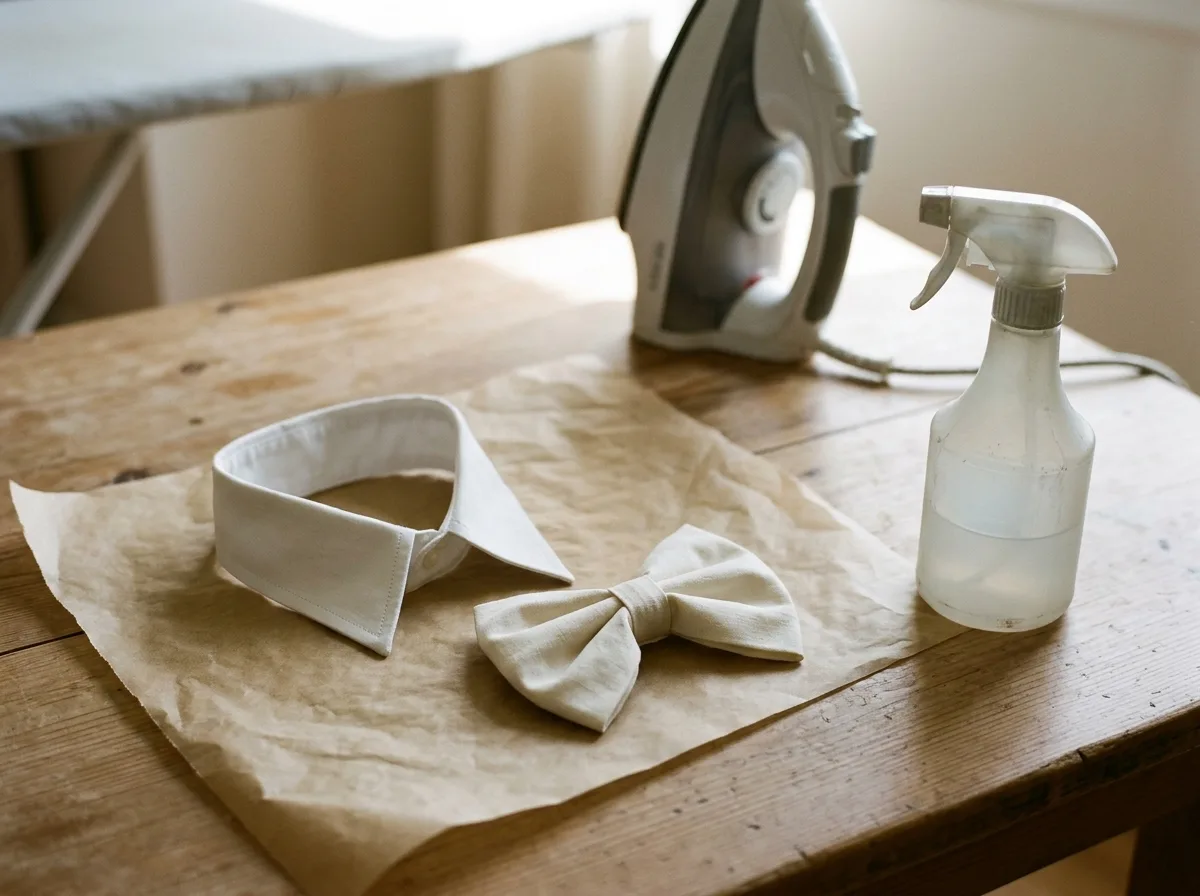
Spray starch or liquid starch gives cotton and linen a crisp, pressed feel. It’s the classic choice for shirt collars, table linens and for quilters who want fabric to cut and sew more accurately. Spray it on, wait a few seconds for it to soak in, then iron on the right temperature for the fabric.
Starch is not permanent. It washes out every time, so you’ll need to reapply it after each wash. For a heavier result, apply two or three light coats rather than one soaking coat, which can leave white flakes or a shiny, scorched look.
Method 5: Sugar Water and Gelatin
Sugar water (often mixed about 1 part sugar to 1 part water and heated until dissolved) and unflavored gelatin are old-fashioned stiffeners for doilies and lace. They’re cheap, non-toxic and give a nice firm finish once dry.
The downside is that they’re the least permanent of all. They soften in humidity, wash out completely, and sugar can attract insects if the piece is stored for a long time. Use them for quick temporary projects, or switch to a glue-based stiffener if you want the shape to last.
Tips for Even, Long-Lasting Results
Always wash and dry new fabric before stiffening it. Sizing and finishes from the factory can stop the stiffener from soaking in evenly. Test your mixture on a scrap first so you can see how stiff, shiny or clear it dries on that particular fabric.
Patience matters more than the product. Thick or layered pieces can take longer than 24 hours to dry all the way through, and removing them from the mold early can cause sagging. To protect finished decor, store it somewhere dry and dust it gently. A light coat of clear acrylic sealer can add some moisture resistance to glue-stiffened pieces, though it won’t make them washable.
FAQ
What is the most permanent way to stiffen fabric?
For decor, a commercial fabric stiffener or PVA glue mixture lasts for years as long as it stays dry. For clothing or anything you’ll wash, interfacing is the only method that stays permanent through washing.
Can I wash fabric stiffened with glue?
Generally no. Water softens most glue-based stiffeners and the piece will lose its shape. Spot clean or dust these items instead.
Does Mod Podge stiffen fabric?
Yes. Mod Podge works in much the same way as a PVA glue mixture and is often used for fabric bowls and decoupage. Like glue, it isn’t meant for items you’ll wash.
Does fabric paint make fabric stiff?
Heavy layers of paint can make fabric feel stiffer, especially plain acrylic, but it’s not a reliable way to stiffen a whole piece. If you want painted fabric to stay soft instead, see our tips on using fabric paint on clothes.
How do I make fabric stiff without glue?
Use starch, sugar water or gelatin for temporary stiffness, or interfacing for a permanent, glue-free result in sewing projects.
New to crochet? Our guide on how to crochet a blanket for beginners is a friendly first big project.
What is the stiffest fabric?
Among everyday fabrics, heavy canvas, buckram and crinoline are some of the stiffest, which is why they are used in hats, bags and structured garments. For a softer fabric, you can add stiffness with fabric stiffener, glue solution or starch, as compared above.
The Bottom Line
To make fabric stiff permanently, match the method to how the item will be used. For bows, ornaments, bowls and crochet decor, a fabric stiffener or a 1:1 PVA glue mix gives years of shape as long as the piece stays dry. For clothes, bags and anything washable, build the stiffness in with interfacing. Save starch, sugar water and gelatin for quick jobs you don’t mind redoing. Want to keep practicing? Our beginner guide to sewing clothes is a great next step.