
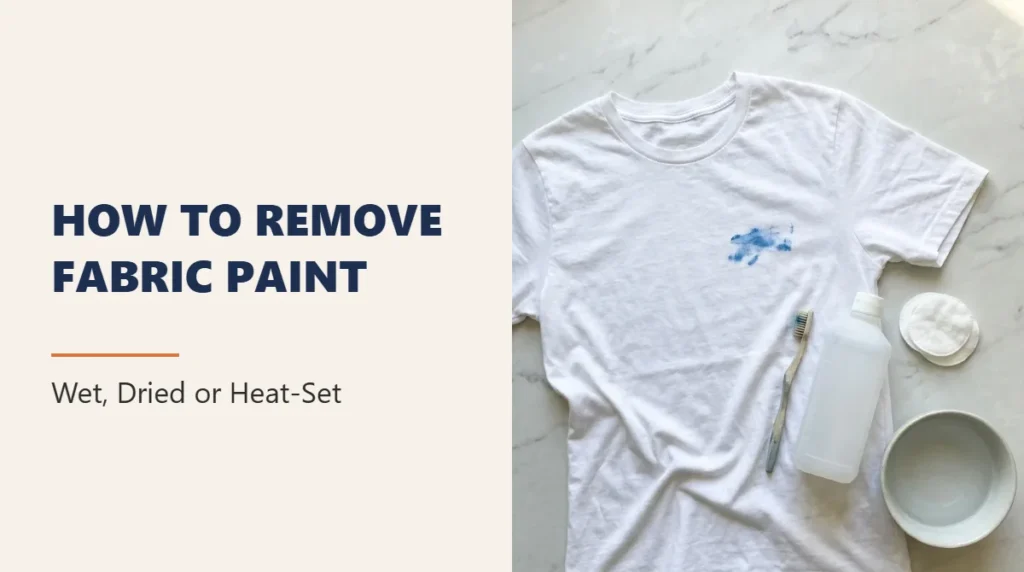
A drip landed on your favorite shirt, a stencil slipped, or a little one decided to “help” with your painting project. Whatever happened, you now have fabric paint where it shouldn’t be. Can you get it out? Often, yes. How easily depends on one thing: how far the paint got through drying and heat-setting.
Fabric paint is made to be permanent once it cures, so the faster you act, the better your odds. Here’s what to do for wet paint, dried paint and heat-set paint, plus honest options when the paint won’t budge.
This post contains affiliate links. As an Amazon Associate I earn from qualifying purchases, at no extra cost to you.

What to Expect: Your Chances by Stage
| Paint stage | Best method | Realistic result |
|---|---|---|
| Still wet | Cold water flush + detergent | Usually comes out fully |
| Dry to the touch (a few hours old) | Rubbing alcohol + detergent scrub | Often comes out, may take several rounds |
| Dried overnight, not heat-set | Rubbing alcohol soak + scrub | Partial to full removal |
| Heat-set or cured for days | Repeated alcohol treatments | Usually fades only; consider covering it |
| Puffy or 3D paint | Soften, then lift with a fingernail or dull knife | Raised paint lifts; a faint mark may stay |
Before you start, check the care label and test any product on a hidden seam first. That’s standard advice from stain-removal guides like the University of Georgia Extension’s paint stain guide, which also warns that water-based paint can become permanent once it dries.
How to Remove Wet Fabric Paint
1. Lift the excess
Scoop off any blob with a spoon or the edge of a card. Don’t wipe, because that spreads the paint deeper into the weave.
2. Flush from the back with cold water
Turn the fabric inside out and hold the stain under a cold tap so the water pushes paint back out the way it came in. Warm or hot water can help the paint bond, so keep it cold.
3. Work in detergent
Rub a few drops of liquid laundry detergent or dish soap into the spot with your fingers or a soft toothbrush. Rinse, check, and repeat until the water runs clear.
4. Pre-treat and wash cold
Apply a stain remover, then machine wash on cold. Let the item air dry and check it in good light. If any color is left, repeat before it ever goes near a dryer or iron.
How to Remove Dried Fabric Paint
Dried fabric paint and acrylic form a flexible plastic film. Water alone won’t touch it, but rubbing alcohol (isopropyl alcohol) can soften it so it scrubs away.
1. Scrape what you can
Gently scrape raised paint with a dull butter knife or your fingernail. Go slowly so you don’t snag the fibers.
2. Test the alcohol on a hidden spot
Dab a little rubbing alcohol inside a hem and blot with a white cloth. If the fabric’s own dye transfers, stop and use only detergent and soaking.
3. Soak, wait and scrub
Place a folded paper towel under the stain, saturate the paint with alcohol, and leave it for 10 to 15 minutes. Scrub with an old toothbrush in small circles, blot, and add more alcohol as it softens. Alcohol-based hand sanitizer works the same way if that’s all you have.
4. Wash and repeat
Rinse the alcohol out, rub in detergent, soak in cool water for an hour, then wash cold and air dry. Stubborn spots often need two or three rounds.
What Not to Use
- The dryer or an iron before the stain is gone. Heat-setting is exactly how fabric paint is made permanent.
- Hot water. It helps acrylic grip the fibers.
- Acetone or nail polish remover on acetate, triacetate or modacrylic. It dissolves these fibers and leaves a hole.
- Bleach on colored fabric. It strips the garment’s own color before it touches the paint.
- Hard scrubbing on delicates. Silk, rayon and loose knits pill and fray quickly.
Tips by Fabric Type
| Fabric | What works | Be careful with |
|---|---|---|
| Cotton and denim | Alcohol + toothbrush scrub; tolerates repeat rounds | Dark denim dye can lighten with heavy scrubbing |
| Polyester and blends | Paint sits on top, so it often lifts more easily | Test alcohol first; no heat |
| Silk, rayon, wool | Cold water and mild detergent, blotting only | Alcohol and scrubbing; consider a dry cleaner |
| Canvas shoes and totes | Alcohol and a stiff brush | Glue on shoe edges; keep alcohol off rubber trims |
When It Won’t Come Out: Cover It Instead
If the paint was heat-set or has cured for days, you may only be able to fade it. That’s when it’s time to turn the mistake into part of the design:
- Paint over it. A small motif, like a flower, star or heart, can hide a spot completely. Browse our easy fabric painting ideas for simple shapes, and follow our guide on how to use fabric paint on clothes so the cover-up lasts.
- Embroider over it. A satin-stitch shape or a few lazy daisies cover small marks beautifully. Start with these hand embroidery stitches for beginners.
- Add a patch or pocket. Iron-on or sewn patches work well on jeans, jackets and bags.
How to Prevent Paint Stains Next Time
- Wear an old shirt or apron while you paint.
- Slip cardboard inside the garment so paint can’t soak through to the back.
- Keep a damp cloth and a cup of water nearby to catch drips while they’re wet.
- Tape stencil edges down firmly and dab paint instead of brushing sideways.
FAQ
Does fabric paint wash off clothes on its own?
Wet fabric paint often rinses out with cold water and detergent. Once it has dried and especially once it’s heat-set, it’s designed not to wash off. That’s great for your designs and bad for accidental drips. If you want your painted designs to last, see how to wash clothes with fabric paint.
How long do I have before fabric paint becomes permanent?
Act within minutes if you can. Most fabric paints are dry to the touch within a few hours, and harder to remove from then on. Our fabric paint drying time guide breaks down the stages.
Does vinegar remove fabric paint?
Vinegar isn’t very effective on dried acrylic-based fabric paint. Rubbing alcohol and detergent do more of the work. Vinegar won’t usually hurt cotton, but it’s not the tool to reach for first.
Is removing acrylic paint the same as removing fabric paint?
Mostly, yes. Most fabric paints are acrylic-based, so the same cold-water and rubbing-alcohol methods apply. Acrylic mixed with fabric medium and heat-set is the hardest to remove. Learn more about how that bond works in our guide to acrylic paint on fabric.
Can a dry cleaner remove fabric paint?
A dry cleaner is a good option for silk, wool or anything labeled dry clean only. Tell them it’s acrylic or fabric paint and how old the stain is. Results on heat-set paint are never guaranteed.
Is there a fabric paint remover?
There is no single remover for every paint. Wet paint usually rinses out with cold water and soap, while dried paint often needs rubbing alcohol or a solvent suited to the paint type, tested on a hidden spot first. Our steps above go through each case.
Planning your next project? See acrylic painting on fabric and clothes for how to make the paint last from the start.
The Bottom Line
Speed is everything. Wet fabric paint usually comes out with cold water and detergent. Dried paint often softens with rubbing alcohol and patient scrubbing. Heat-set paint rarely comes out fully, so if a few rounds don’t work, cover it with paint, embroidery or a patch. And keep the item away from the dryer until you’re happy with the result.