

A blanket is one of the most rewarding first big projects in crochet. It is flat, it does not need shaping or careful fitting, and every row is practice that makes your stitches more even. The only real challenge is patience, because a blanket is simply the same few steps repeated many times.
This guide walks you through choosing yarn and a hook, working out how many chains to start with, estimating how much yarn you need, keeping your edges straight, and finishing the blanket so it looks neat. If you have never held a hook before, read our crochet for absolute beginners guide first to learn the chain and single crochet.
This post contains affiliate links. As an Amazon Associate I earn from qualifying purchases, at no extra cost to you.
Choose Your Yarn and Hook
For a first blanket, pick a smooth, light colored yarn. Fuzzy, dark or very textured yarns hide your stitches, which makes counting and fixing mistakes much harder. Worsted weight (category 4) is the most common choice, and bulky weight (category 5) grows faster if you want quicker progress.
The yarn label tells you which hook to use. As a general guide, worsted yarn is usually paired with a 4.5 to 5.5 mm hook and bulky yarn with a 5.5 to 8 mm hook. If you plan to try different yarns over time, a crochet hook set with several sizes is more useful than a single hook. Ergonomic handles are worth considering if your hand gets tired.
| Yarn weight | Typical hook size | Good for |
|---|---|---|
| Worsted (#4) | 4.5 to 5.5 mm (US 7 to I-9) | Soft, classic blankets with clear stitches |
| Bulky (#5) | 5.5 to 8 mm (US I-9 to L-11) | Faster, thicker blankets |
| Super bulky (#6) | 8 mm and up | Very quick chunky throws, fewer stitches to count |
How Many Chains to Start With
The first row of any crochet blanket is the foundation chain. To know how long to make it, crochet a small test swatch first, about 4 by 4 inches, in the stitch you plan to use. Count how many stitches fit in one inch, then multiply that by the width you want. If your swatch has 3 single crochet stitches per inch and you want a blanket 36 inches wide, you need 108 stitches.
For single crochet, chain the number of stitches you want plus one extra chain. The extra one is the turning chain, and your first stitch goes into the second chain from the hook. So for 108 stitches, chain 109. If you choose double crochet instead, most US patterns add two or three extra chains for the taller turning chain, so follow the instructions you are working from.
Keep the foundation chain loose. A tight chain makes the bottom edge narrower than the rest of the blanket. If your chains are always tight, use a hook one size larger just for the chain, then switch back.
How Much Yarn You Need
Yarn amounts vary a lot with stitch, hook size and tension, so the most reliable estimate comes from your own swatch. Crochet a 6 by 6 inch square in your stitch, weigh it on a kitchen scale, and note the grams. That square covers 36 square inches.
Next, multiply the width and length of your planned blanket to get its area in square inches, divide that number by 36, and multiply the result by the weight of your swatch. Add about 10 to 15 percent for the border, weaving in ends and small mistakes, then divide by the weight of one skein (printed on the label) to see how many skeins to buy. Buying all the yarn at once from the same dye lot avoids visible color changes halfway through.
Crochet the Rows, Step by Step
- Make a slip knot and chain your foundation chain, keeping it loose and even.
- Work the first row. Insert the hook into the second chain from the hook and make a single crochet. Make one single crochet in every chain to the end.
- Turn the work. Chain one and turn the blanket over so the back of the row faces you.
- Work the next row. Make one single crochet into each stitch across. Skip the turning chain; it does not count as a stitch in single crochet.
- Count your stitches. At the end of each row, count until you trust your edges. You should have the same number every time.
- Repeat until the blanket reaches the length you want.
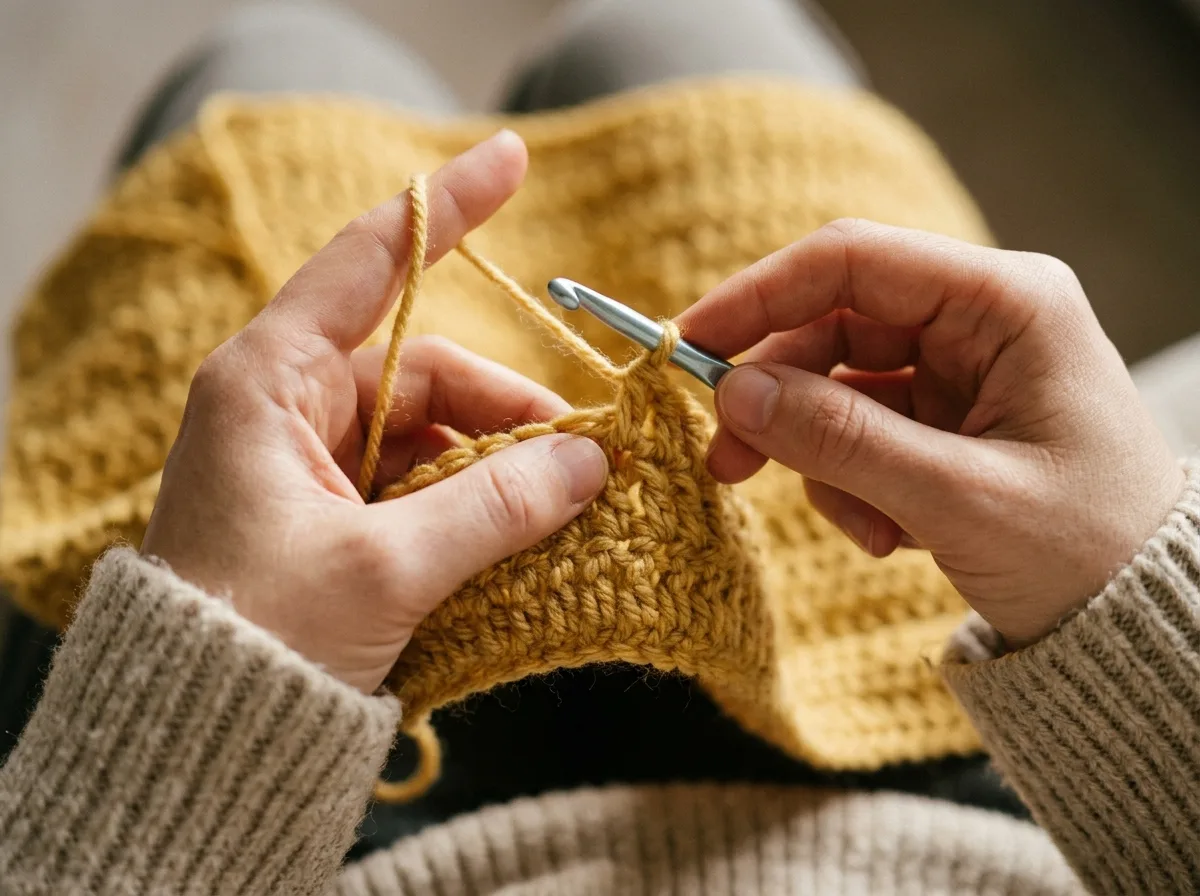
To change colors for stripes, work the last stitch of a row until two loops are left on the hook, then pull the new color through to finish the stitch. Leave a tail of about 6 inches from each color to weave in later.
How to Keep Your Edges Straight
Wavy or slanted edges are the most common beginner problem, and they almost always come from gaining or losing stitches at the ends of rows. The usual causes are working a stitch into the turning chain by accident, or missing the very last stitch, which can be hard to see.
Placing a stitch marker or a safety pin in the first and last stitch of each row makes them easy to find. Counting every row for the first few inches also helps you catch a change early, when it is quick to pull back and redo.
Tension matters too. If you crochet tightly when you are tired and loosely when you are relaxed, the blanket can narrow and widen. Short, regular sessions usually give more even results than one very long one.
Finishing: Weaving in Ends and Adding a Border
When the blanket is long enough, cut the yarn and pull the tail through the last loop. Thread each tail onto a yarn needle and weave it back and forth through the stitches on the wrong side for a few inches, changing direction at least once so it cannot work loose.
A border makes the edges look tidy and hides small unevenness. The simplest one is a round of single crochet all the way around, working three stitches into each corner so it lies flat. If the border ripples, you added too many stitches along the sides; if it pulls in, you added too few.
If you want a decorative crochet piece to keep its shape instead, such as a doily or a bow, our guide on how to make fabric stiff permanently covers stiffening methods. For a blanket you will wash and use, skip stiffeners and simply wash it according to the yarn label.
Want a textured blanket next? Our moss stitch crochet blanket guide uses only chains and single crochet, and if you are making one for a newborn, read our crochet baby blanket for beginners guide for sizes, yarn and safety.
FAQ
What is the easiest crochet stitch for a blanket?
Single crochet is the easiest to learn and count, and it makes a dense, warm fabric. Double crochet is taller, so the blanket grows faster, but it has more open space between stitches.
Why is my crochet blanket getting wider or narrower?
You are adding or losing stitches at the ends of rows. Mark the first and last stitch of each row and count your stitches until the edges stay straight.
How big should my first crochet blanket be?
Start smaller than you think. A baby blanket or a lap blanket is easier to finish than a full bed size, and you can always make a bigger one once you know how long your rows take.
Should I wash my blanket before using it?
Check the yarn label. Many acrylic and cotton yarns can be machine washed on a gentle cycle, while wool often needs hand washing and drying flat.
Prefer to work in small pieces? Our granny square blanket for beginners guide shows how to make, join and border squares instead.
Ready for stripes or texture? Learn how to change colors in crochet for neat stripes, or add raised rows with the puff stitch.
When the body of your blanket is finished, frame it with one of these easy crochet blanket borders for beginners, starting with a simple single crochet round.
The Bottom Line
Crocheting a blanket comes down to a good yarn and hook pair, a loose foundation chain with one extra chain for single crochet, the same number of stitches in every row, and neat finishing. Make a swatch to plan the width and the yarn, mark your edge stitches, and enjoy the steady rhythm of the rows. When you want a new craft to try next, our guide to hand embroidery stitches every beginner should learn is a relaxing place to start.