
A crochet baby blanket is one of the most popular first projects, and for good reason. It is smaller than a full throw, it makes a meaningful gift, and it lets you practise one simple stitch over and over until it feels natural. The three things that decide whether it turns out well are the size, the yarn and the stitch you choose.
This guide explains common baby blanket sizes, which yarns and stitches are best, how to estimate yarn, and how to make the finished blanket safe and easy to wash. If you have never crocheted a blanket before, our step by step guide on how to crochet a blanket for beginners covers the basic method in detail.
This post contains affiliate links. As an Amazon Associate I earn from qualifying purchases, at no extra cost to you.
What Size Should a Crochet Baby Blanket Be?
There is no single official size, and you will see slightly different numbers in different patterns. The ranges below are common starting points. A stroller or car seat size of around 30 x 35 inches is a very practical first project because it is quick to finish and useful for a long time.
| Blanket type | Common size range | Good for |
|---|---|---|
| Lovey or security blanket | 10 to 15 in square | A small comfort square, quick gift |
| Stroller or car seat | about 30 x 35 in | Walks, travel, tummy time mat |
| Receiving blanket | 30 to 40 in square | Wrapping, nursing cover, play mat |
| Crib or toddler | about 36 x 48 to 45 x 60 in | Toddler bed, sofa, keepsake |
When in doubt, go a little bigger rather than smaller. A slightly larger blanket stays useful as a play mat or a toddler blanket long after the newborn stage, while a very small one is quickly outgrown.
The Best Yarn for a Crochet Baby Blanket
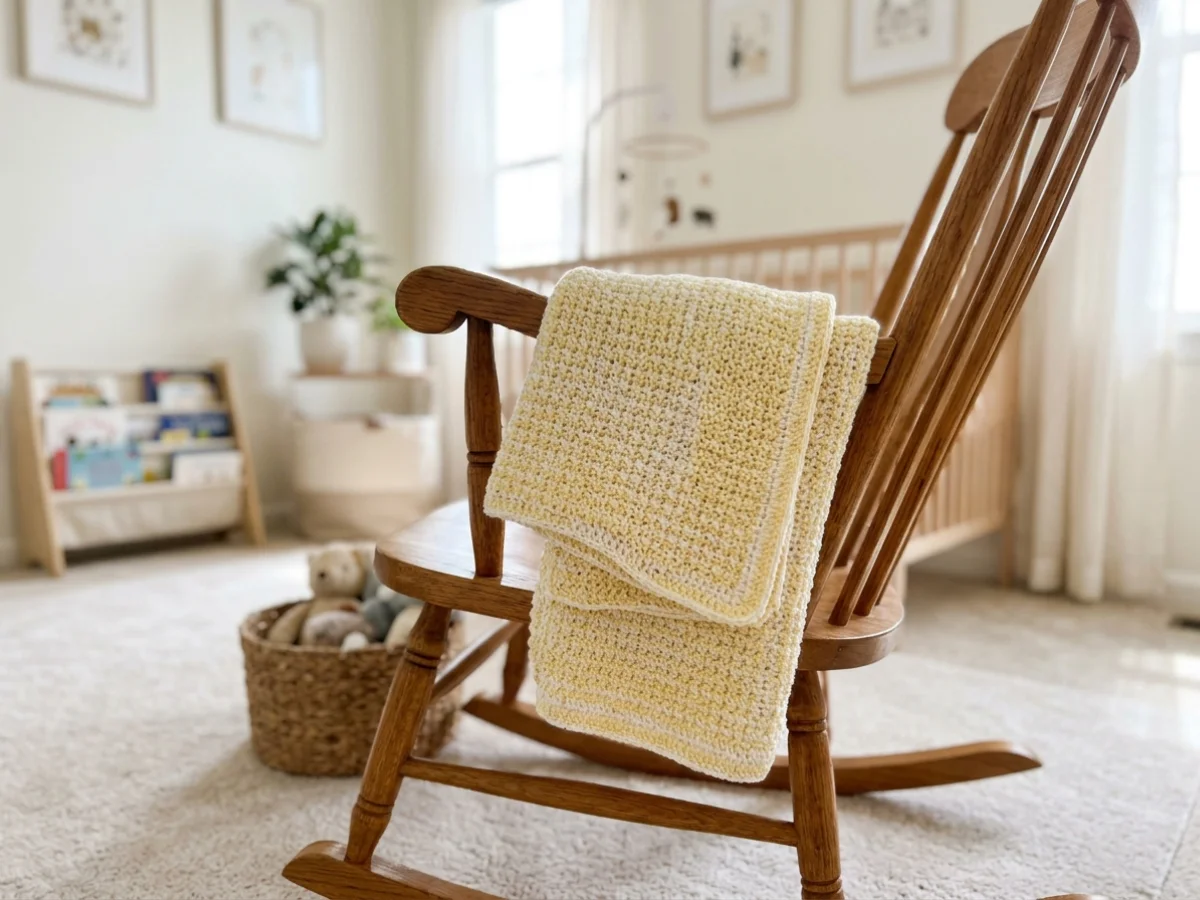
Baby blankets get washed a lot, so the best yarn is soft against the skin and easy to machine wash. Many crocheters choose a soft DK baby yarn or a worsted weight acrylic for that reason. Acrylic and acrylic blends are affordable, light and hold their shape in the washer. Cotton is breathable and very sturdy but heavier, and it can feel stiff until it has been washed a few times.
For thickness, DK (weight 3) gives a lighter, softer drape, while worsted (weight 4) works up faster and makes a warmer blanket. The Craft Yarn Council yarn weight system explains these numbers if your labels use different names. Avoid very fuzzy or shedding yarns such as eyelash yarn or loose mohair for baby items, because fibers can come loose, and avoid yarns that are hand wash only unless you know the parents will not mind.
Hook Size and Gauge
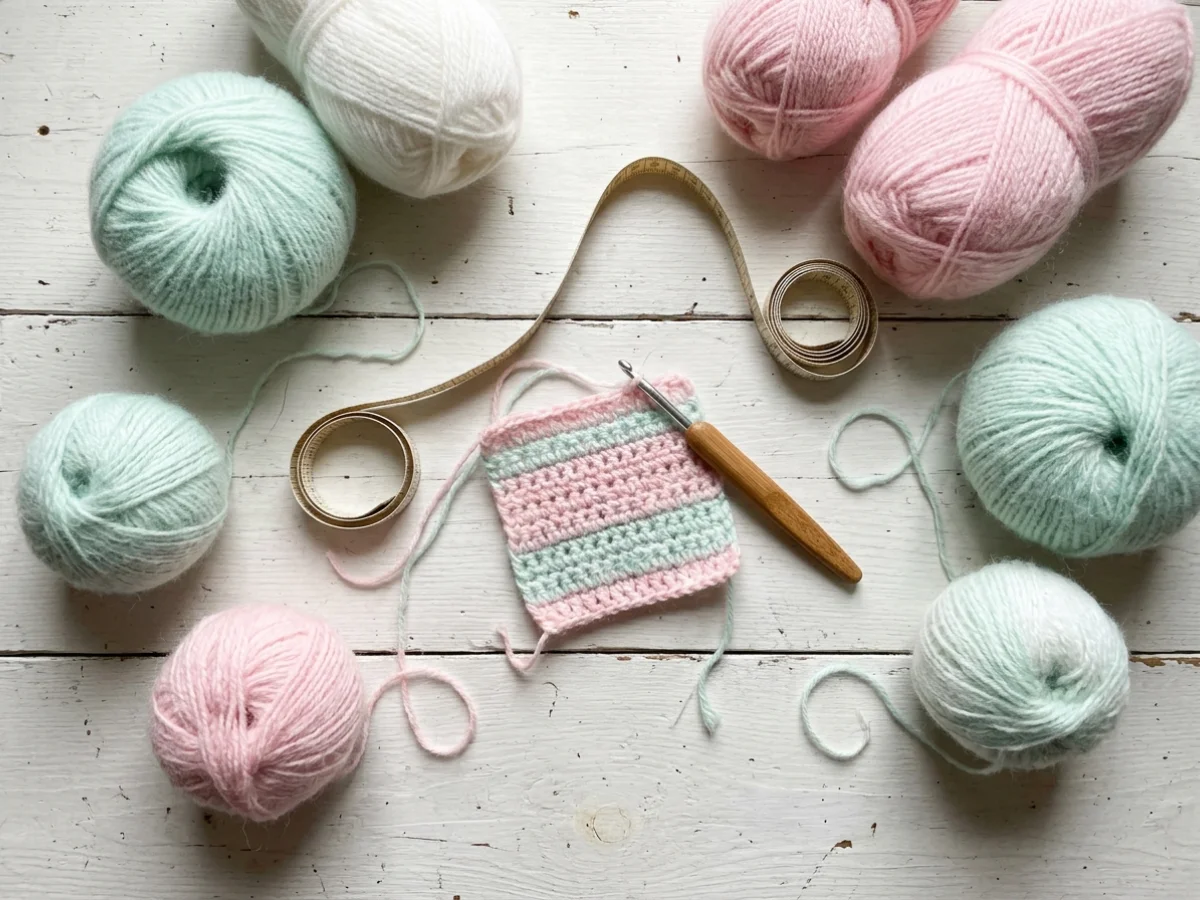
Start with the hook size printed on your yarn label, usually around 4 mm for DK and 5 to 5.5 mm for worsted. Crochet is naturally denser than knitting, so many people go up half a size to a full size for a softer blanket. The aim is fabric that bends easily but still has small, closed stitches.
Make a small swatch of about 4 x 4 inches in the stitch you plan to use. Count how many stitches fit in 4 inches and divide by 4 to get stitches per inch. Multiply that by your blanket width to find how many stitches to start with. It takes ten minutes and saves you from a blanket that ends up far too wide or too narrow.
Safe Stitches for Baby Blankets
The safest stitches for a baby blanket are dense ones with small holes. Single crochet, half double crochet and moss stitch all make a closed fabric that tiny fingers and toes cannot poke through. Very open, lacy stitches and large chain loops look pretty but can catch small fingers, so save them for blankets meant for older children or for decoration.
Our moss stitch crochet blanket guide is a great match for a baby blanket because the fabric is flat, reversible and dense. A granny square blanket also works if you join the squares tightly and keep the holes small. Whatever you choose, keep the design simple: no buttons, beads, sequins, pompoms or long fringes, because small parts and long strands are not safe around babies.
Safe Sleep: When Can a Baby Use the Blanket?
This part is important. The American Academy of Pediatrics advises keeping soft objects and loose bedding, including blankets, out of a baby’s sleep space for the first year to lower the risk of sleep related deaths. Their parents guide to safe sleep explains the reasons and suggests a wearable blanket or sleep sack for warmth instead.
That does not make a handmade blanket less useful. It is perfect as a supervised tummy time mat, a cover for a car seat or stroller while an adult is watching, a nursing cover, a soft layer on the floor for play, or a keepsake for later. If you give one as a gift, a short note about safe sleep is a kind and helpful touch.
How Much Yarn Do You Need?
Yarn use depends on the stitch, hook and how tightly you work, so the most reliable method is to measure your own. Weigh your first ball, crochet a few rows at the full blanket width, weigh the ball again and measure how tall those rows are. The difference in weight is what those rows used.
Then scale it up to the full length and add about 10 percent for the border and safety. For example, if 8 rows used 40 g and measured 2 inches, a 35 inch long blanket needs about 40 x (35 / 2) = 700 g, plus 10 percent, so about 770 g. Buy enough from one dye lot so the color matches from start to finish.
Finishing, Washing and Care
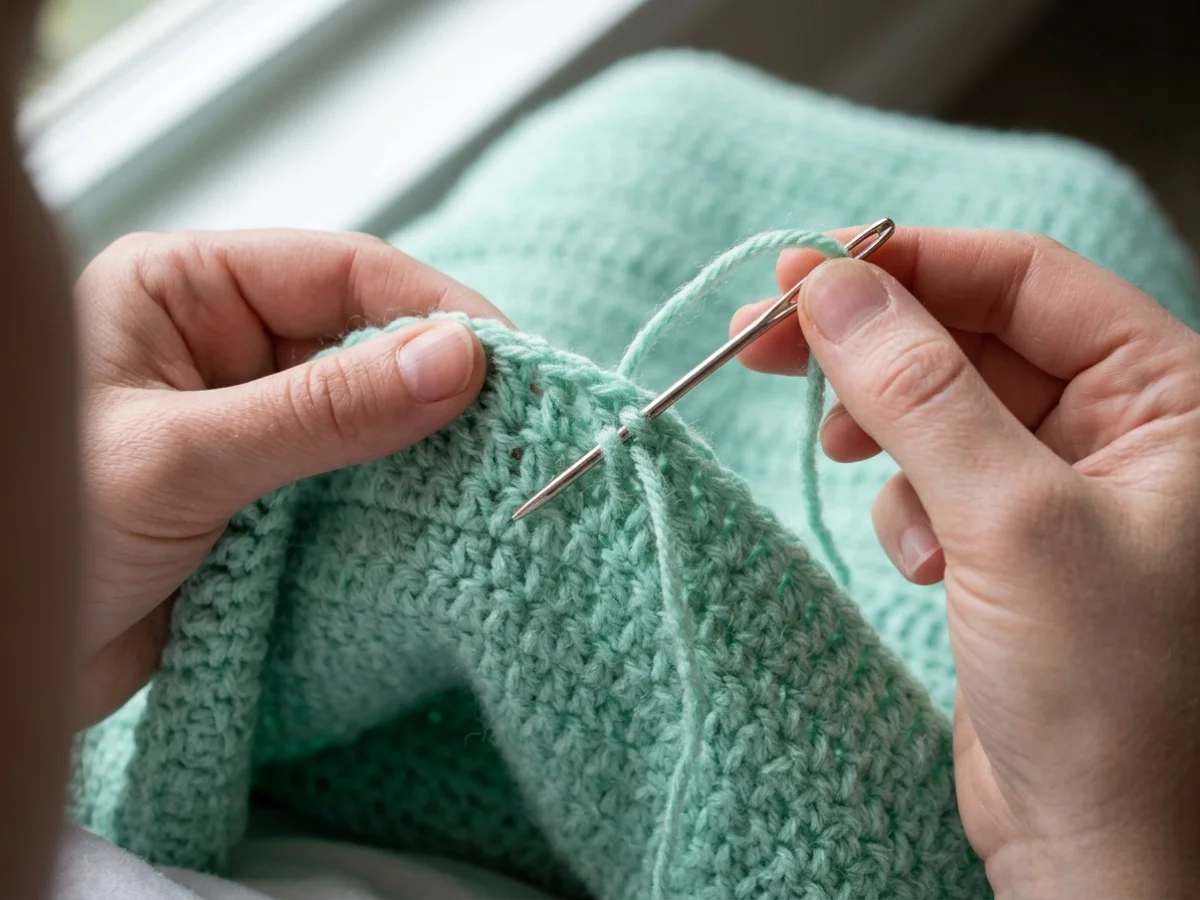
Weave in every yarn tail for at least a few inches, and change direction once or twice as you weave so the tail cannot work its way out with washing. A blunt tapestry needle makes this much easier than trying to do it with the hook. Trim the end close to the fabric once it is secure.
Wash the finished blanket once before giving or using it, following the yarn label. Most acrylic baby yarns can go in a washing machine on a gentle cycle in a mesh bag, then be laid flat or tumble dried on low. Washing first softens the stitches and removes any dust from storage. If you are giving the blanket as a gift, tuck one yarn label in with it so the parents know how to wash it.
Frequently Asked Questions
What is the easiest crochet stitch for a baby blanket?
Single crochet and half double crochet are the easiest. Moss stitch is a great next step because it only adds a chain 1 between single crochets and gives a soft, textured result.
How long does it take to crochet a baby blanket?
It depends on the size, yarn and stitch. A stroller size blanket in worsted weight yarn is a comfortable project to work on over several evenings or a few weekends.
Is acrylic yarn safe for babies?
Soft acrylic baby yarn is widely used for baby blankets because it is gentle, light and machine washable. Choose a smooth yarn that does not shed and always wash the blanket before use.
Can a baby sleep with a crochet blanket?
Pediatric safe sleep guidance says no loose blankets in the sleep space during the first year. Use the crochet blanket for supervised play and outings, and use a sleep sack for sleep.
How big should a first baby blanket be?
About 30 x 35 inches is a good first size. It is quick to finish and stays useful for years. For more blanket planning tips, see our crochet starter guide.
The Bottom Line
A great first crochet baby blanket is simple: a practical size around 30 x 35 inches, a soft and washable DK or worsted yarn, and a dense stitch with no large holes. Leave off small parts and long strands, weave in every end well, and wash the blanket before it is used. Pair it with a note about safe sleep, and you have made something both beautiful and thoughtful.