
Choosing a sewing machine needle feels confusing at first because every pack is covered in numbers like 80/12 or 90/14 and words like universal, ballpoint and microtex. Yet the needle is the cheapest part of your machine and the one that changes your stitch quality the most. The wrong needle can skip stitches on knits, punch holes in silk or snap on thick denim.
This guide explains how needle sizes work, what each needle type is for, a fabric to needle chart you can save, and how often to change the needle. Once you know these few rules, you will be able to pick the right pack in a shop in seconds. If you are just setting up your machine, our step by step guide on how to thread a sewing machine covers the needle threading part too.
This post contains affiliate links. As an Amazon Associate I earn from qualifying purchases, at no extra cost to you.
How Sewing Machine Needle Sizes Work
Most needle packs show two numbers separated by a slash. The first number is the metric or European size, which is the diameter of the needle blade in hundredths of a millimeter, so an 80 needle is about 0.8 mm thick. The second number is the American size, which runs on its own scale from 8 to 19. Both numbers describe the same needle, so 80/12 is one size, not two.
The rule to remember is simple: the higher the number, the thicker and stronger the needle. Thin needles make small holes and suit fine, light fabrics. Thick needles are stiffer, so they push through dense layers without bending, and they have a larger eye for heavier thread. Here are the common pairs you will see on packs.
| European size | American size | Thickness |
|---|---|---|
| 60 | 8 | Very fine |
| 65 | 9 | Very fine |
| 70 | 10 | Fine |
| 75 | 11 | Fine to medium |
| 80 | 12 | Medium |
| 90 | 14 | Medium heavy |
| 100 | 16 | Heavy |
| 110 | 18 | Very heavy |
| 120 | 19 | Extra heavy |
Check the Needle System First
Before size and type, make sure the needle fits your machine at all. Nearly all home sewing machines use the needle system called 130/705 H, often printed as 15×1 or HAx1 on the pack. These needles have a flat side on the shank, so they only go in one way. Industrial machines and sergers often use different systems, so check your manual before you buy.
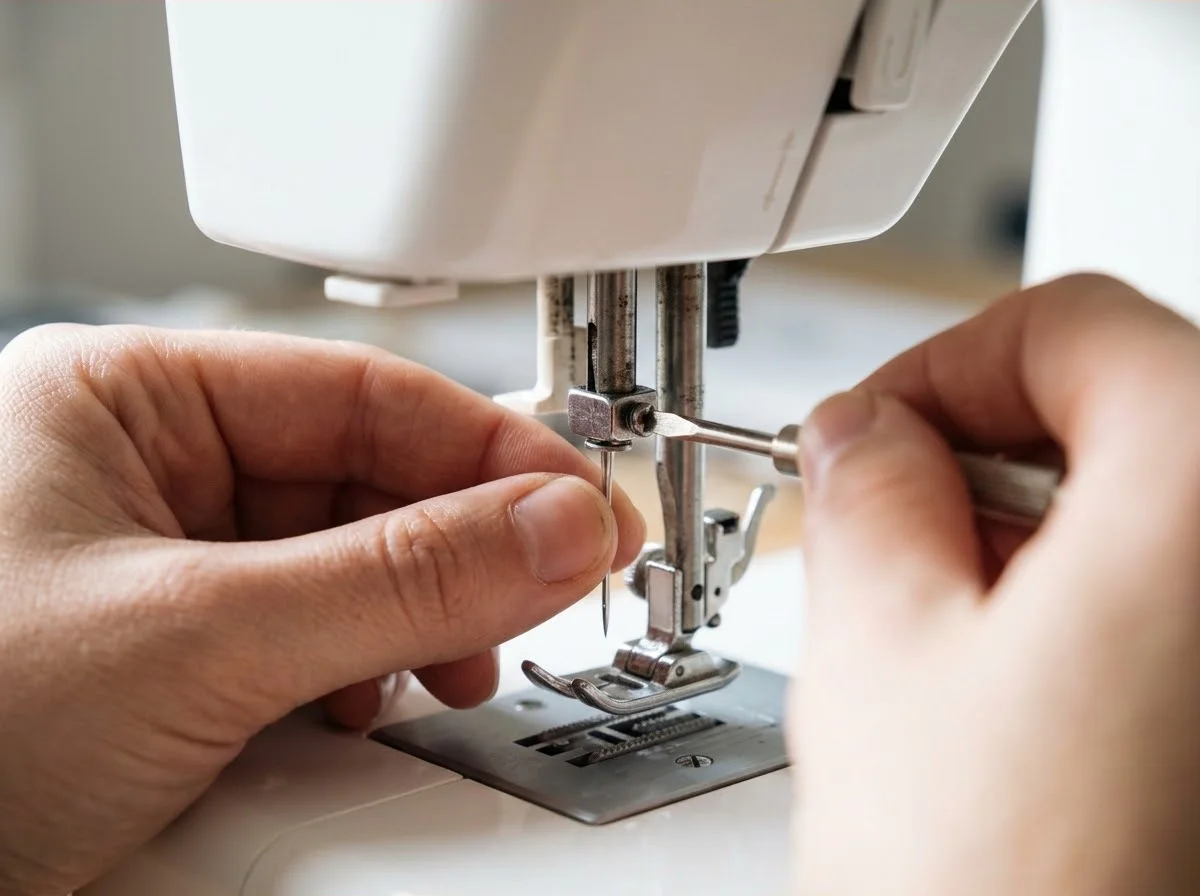
When you put a household needle in, the flat side usually faces the back of the machine and the long groove down the front of the needle faces you. Push it up as far as it will go, then tighten the needle clamp screw. A needle that is not pushed all the way up is one of the most common reasons for skipped stitches right after a needle change.
Needle Types Explained
Size tells you how thick the needle is, and type tells you what shape the point and eye are. The point matters because woven and knit fabrics behave differently. A woven fabric is made of crossing threads that a sharp point can slip between, while a knit is made of loops that a sharp point can cut, which leads to runs and holes.
- Universal: a slightly rounded point that works on most woven fabrics and many stable knits. This is the needle most machines ship with.
- Ballpoint (jersey): a more rounded point that pushes knit loops aside instead of piercing them. Use it for t-shirt jersey, interlock and sweatshirt fleece.
- Stretch: a special eye and scarf designed to stop skipped stitches on very stretchy knits with spandex or elastane, such as swimwear and leggings fabric.
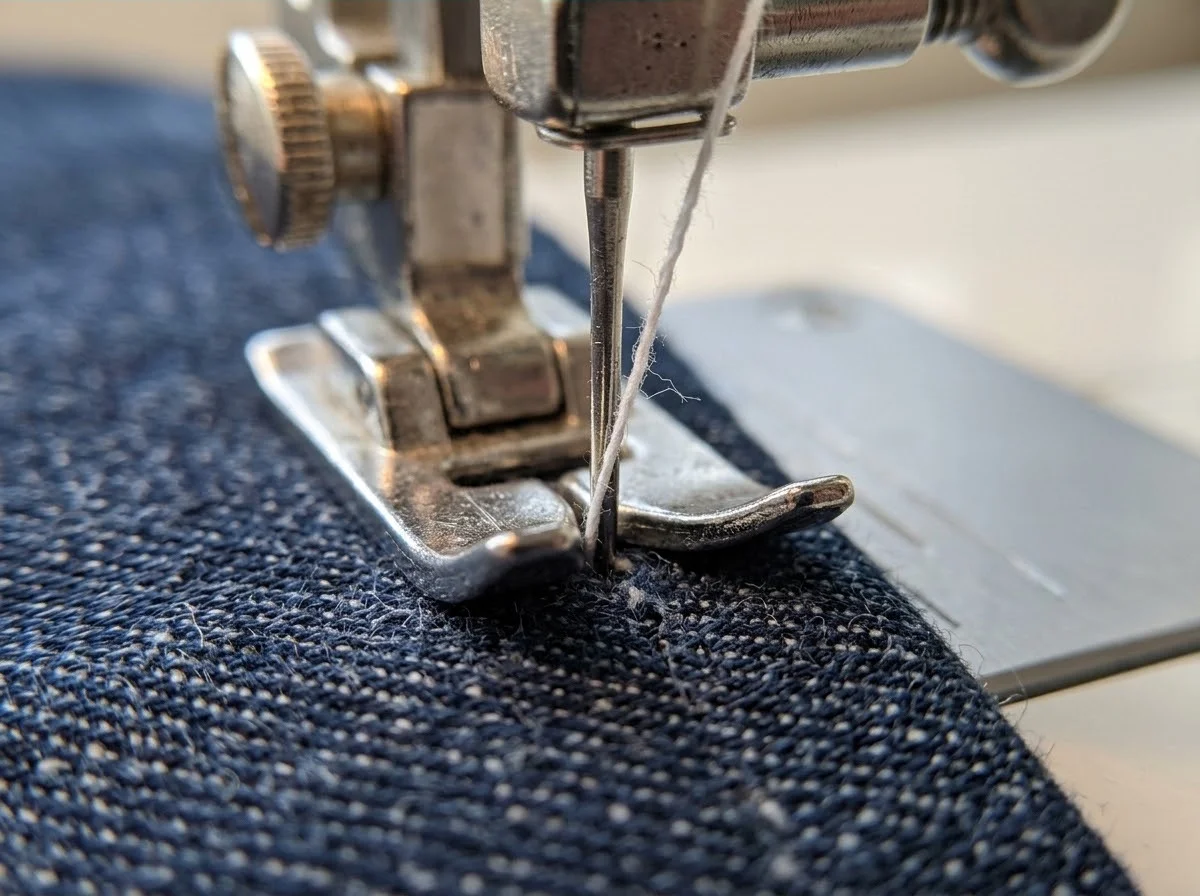
- Jeans (denim): a sharp point and a stronger blade for denim, canvas and heavy twill, so the needle does not deflect on thick seams.
- Microtex (sharp): a very slim, sharp point for silk, microfiber, fine cotton lawn and precise topstitching.
- Quilting: a tapered point that passes through several layers of cotton and batting cleanly.
- Embroidery: a larger eye and a special scarf that protect rayon and polyester embroidery thread from shredding at speed.
- Topstitch: an extra large eye and deep groove for thick topstitching thread or two threads through one needle.
- Leather: a cutting point for real leather; do not use it on woven fabric or faux leather with a knit back, because it slices fibers.
Twin needles are labelled with two numbers too, such as 2.0/80 or 4.0/90. The first number is the distance between the two needles in millimeters and the second is the needle size. They make two parallel rows of stitching, which is handy for hemming knits.
Fabric and Needle Chart (Save This)
Use this chart as a starting point. If your fabric falls between two rows, test both sizes on a scrap and choose the one that makes the neatest stitch with no skipped stitches or pulled threads.
| Fabric weight | Example fabrics | Needle size | Needle type |
|---|---|---|---|
| Very light | Chiffon, organza, silk georgette | 60/8 to 65/9 | Microtex |
| Light | Voile, cotton lawn, batiste | 70/10 | Microtex or universal |
| Light to medium | Quilting cotton, poplin, shirting | 75/11 to 80/12 | Universal |
| Medium | Linen, flannel, chambray | 80/12 to 90/14 | Universal |
| Medium knit | T-shirt jersey, interlock | 75/11 to 90/14 | Ballpoint or stretch |
| Medium heavy | Denim, twill, canvas | 90/14 to 100/16 | Jeans |
| Heavy | Heavy denim, upholstery, duck canvas | 100/16 to 110/18 | Jeans |
Thread plays a part too. All-purpose polyester thread works well with sizes 75/11 to 90/14. If you use heavier topstitching thread, go up a size or use a topstitch needle so the thread can move freely in the eye. If the thread frays or breaks often, the eye may be too small for it.
How to Pick the Right Needle in Three Questions
When you stand in front of the needle display, ask three quick questions. First, is my fabric woven or knit? Woven fabrics usually take a universal, microtex or jeans needle, and knits take a ballpoint or stretch needle. Second, how heavy is it? Use the chart above to pick a size. Third, what thread am I using? Ordinary thread fits standard eyes, while thick or decorative thread needs a topstitch or embroidery needle.
For a beginner, a mixed pack of universal needles in sizes 70/10, 80/12 and 90/14 covers most first projects, such as a tote bag, cushion covers or our easy apron pattern. A pack of jeans needles in size 100/16 is worth having before you hem your first pair of denim pants, because a universal needle can bend or break on the thick side seams.
When to Change Your Sewing Machine Needle
Needles wear out long before they look damaged. A common guideline from needle makers is to fit a new needle after about six to eight hours of sewing, or at the start of each new project. Change it straight away if you hit a pin, if the needle bends, or if you hear a dull popping or thumping sound as it goes through the fabric.
Other signs of a worn needle are skipped stitches, snagged threads in the fabric, fraying top thread and small pulled loops along the seam. Many of these look like tension problems, which is why a new needle is the first thing to try in our sewing machine troubleshooting guide. To tell needles apart once they are out of the pack, keep partly used ones in a labelled pincushion section or a small box, since the size is stamped very small on the shank.
Common Needle Mistakes Beginners Make
The most common mistake is using one universal needle for everything for months. It will sew, but the stitches slowly get worse, and knits start to skip and ladder. Swapping to a fresh needle of the right type is often the whole fix.
Other easy mistakes are putting the needle in backwards with the flat side facing the wrong way, not pushing it all the way up into the clamp, using a needle that is too fine for denim so it deflects and hits the needle plate, and using a sharp or leather needle on knits, which cuts the loops. Also check that the bobbin matches your machine, because a wrong bobbin can feel like a needle issue; our guide on how to wind and insert a bobbin covers that.
FAQ
What does 80/12 mean on a sewing machine needle?
It is one needle size written in two systems. The 80 is the European size (about 0.8 mm blade diameter) and the 12 is the American size. It is a medium needle that suits quilting cotton and most light to medium wovens.
Is a bigger number needle thicker or thinner?
Thicker. A 110/18 needle is much thicker than a 70/10. Use higher numbers for heavy fabrics and lower numbers for fine ones.
Can I use a universal needle on knit fabric?
On stable knits, a universal needle often works. On stretchy jersey or anything with spandex, a ballpoint or stretch needle gives better stitches and prevents holes and skipped stitches.
What needle should I use for denim?
A jeans needle in size 90/14 for light denim and 100/16 or 110/18 for heavier denim and thick seams. Go slowly over bulky seams and turn the handwheel by hand if needed.
How often should I change my sewing machine needle?
About every six to eight hours of sewing, at the start of a new project, or immediately if it bends, hits a pin or starts skipping stitches.
The Bottom Line
Read a needle pack from left to right: the system (130/705 H for home machines), the type (universal, ballpoint, stretch, jeans, microtex and so on) and the size, where a bigger number means a thicker needle. Match the type to your fabric structure, the size to the fabric weight, and change the needle often. These small habits fix more stitch problems than any tension dial. For more detail from a needle manufacturer, see the Schmetz needle site, and for general background read the sewing machine needle article on Wikipedia. When you are ready to put this into practice by hand too, our guide on how to sew a button by hand is a quick, useful skill to learn next.