I bought a hook and a ball of yarn on a Tuesday, convinced I’d have a scarf by the weekend. By Thursday I’d unravelled the same six rows four times, my tension was so tight the hook barely moved, and I genuinely thought crochet just wasn’t for me. The thing nobody told me was that almost every beginner quits at exactly that point, not because crochet is hard, but because they started with the wrong stitch, the wrong yarn, or a project too big to finish. Once I switched to the right combination of all three, I finished my first project in a single evening.
Quick Answer: The fastest way to learn crochet is starting with a single crochet stitch, worsted weight yarn, and a 5.0mm (H-8) hook, then practicing on a small project like a coaster before attempting anything wearable. Most beginners can complete a simple project within their first week. If you’re exploring other low-cost hobbies, our fabric painting ideas guide is another easy place to start.
Why So Many Beginners Quit Early
Crochet has a low barrier to entry, one hook and one ball of yarn is technically all you need, which is exactly why so many people jump in without any real starting point. They pick a pattern that’s too advanced, grab yarn that’s hard to see stitches in, or skip learning tension altogether. All three of those mistakes compound fast, and by the third row most beginners are frustrated enough to put the hook down for good.
There’s also a quieter reason people quit that rarely gets mentioned: they compare their first attempt to a finished project they saw online, made by someone with years of practice, and assume something is wrong with them when their coaster looks lumpy or their edges curl. Every experienced crocheter has a drawer full of early projects that look exactly like that. It’s not a sign you’re doing it wrong. It’s just what learning any new hand skill looks like before muscle memory kicks in.
The fix isn’t more willpower. It’s starting with the right setup, the right stitch, and a project small enough to actually finish.
What You’ll Actually Need
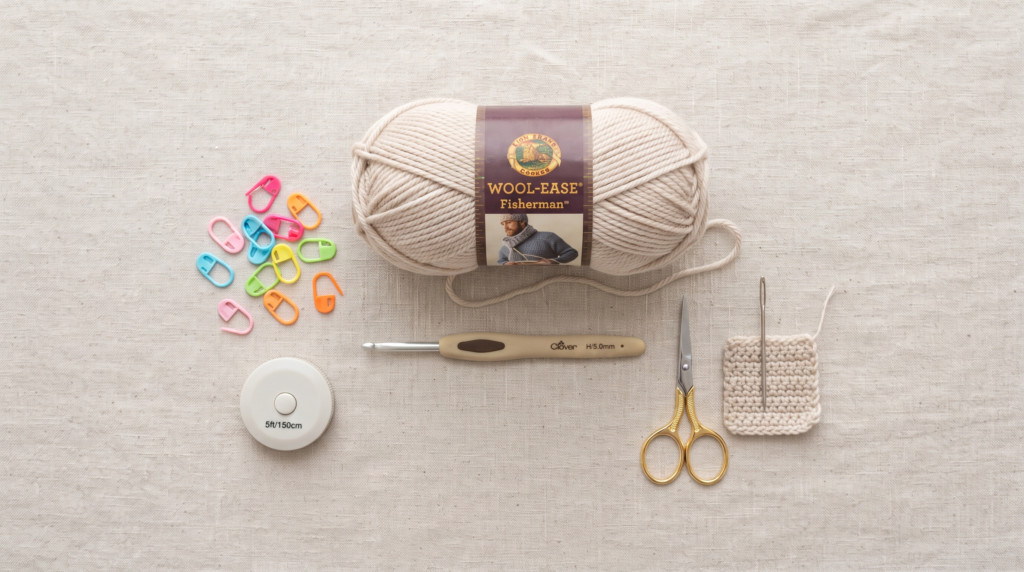
- A 5.0mm (US H-8) crochet hook, ergonomic handle if possible
- Worsted weight (medium, category 4) yarn in a light, solid color
- A yarn needle for weaving in ends
- Small scissors
- Stitch markers, optional but genuinely useful for counting rows
Why Yarn Color and Weight Matter More Than You’d Think
Dark, variegated, or fuzzy yarn hides your stitches, which makes it nearly impossible to see where you went wrong. A light, solid-colored, worsted weight yarn lets you actually see each loop, which matters far more than it sounds like it should when you’re still learning to count stitches.
Crochet Hook Sizes vs. Yarn Weight
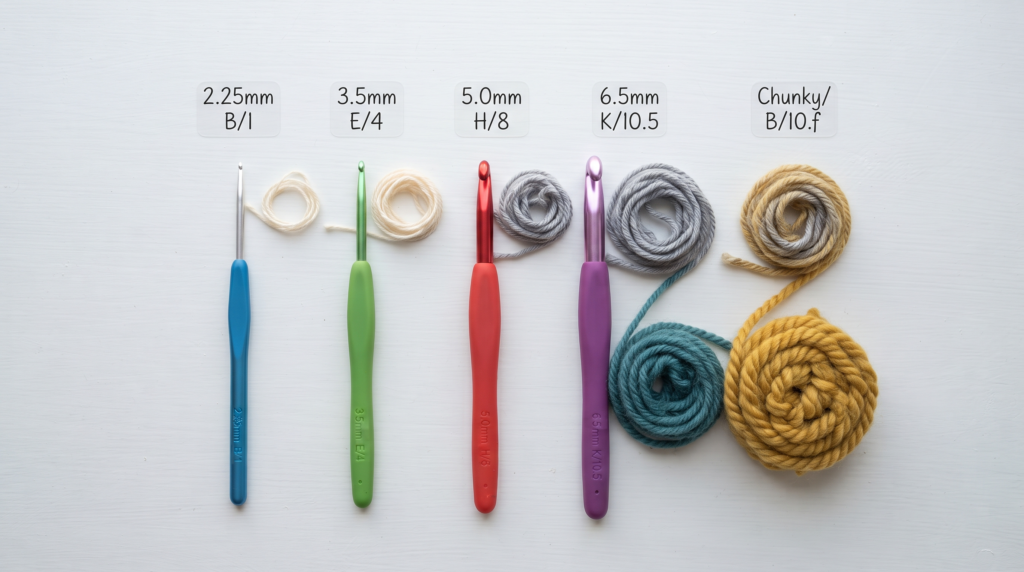
| Hook Size | Yarn Weight | Best For |
|---|---|---|
| 3.5mm (E-4) | Fine / Sport | Delicate items, amigurumi |
| 5.0mm (H-8) | Worsted (Medium) | Beginner projects, blankets, dishcloths |
| 6.5mm (K-10.5) | Bulky | Chunky scarves, fast projects |
| 9.0mm (M-13) | Super Bulky | Quick throws, arm-friendly practice |
For your very first project, stick with a 5.0mm hook and worsted weight yarn. It’s the combination most patterns are written for, and it’s forgiving enough that small tension mistakes don’t ruin the whole piece.
How to Hold the Hook and Yarn
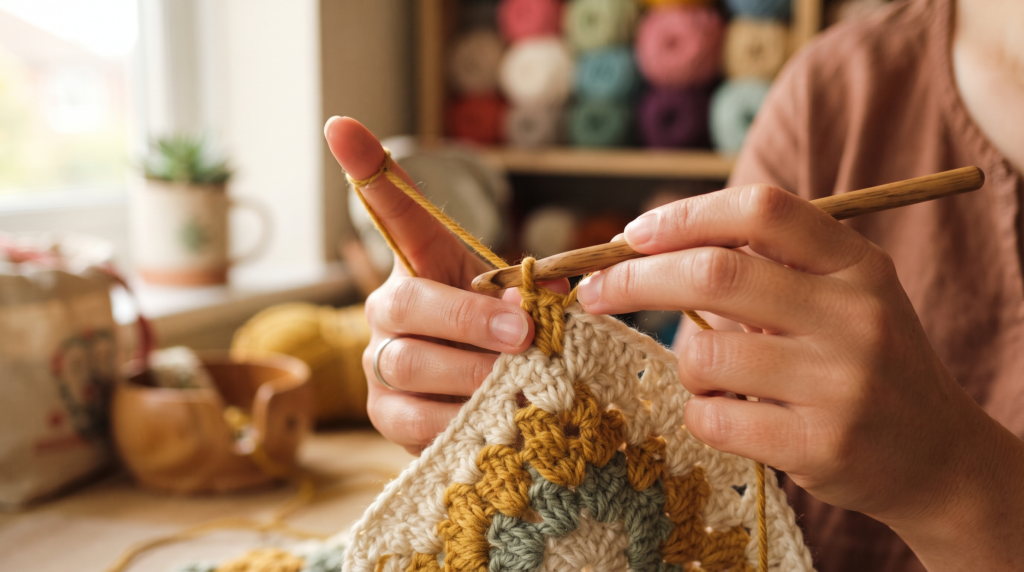
There isn’t one correct way to hold a crochet hook, but most beginners do best with the pencil grip, holding the hook the way you’d hold a pen, rather than the knife grip. Wrap the yarn loosely around your pinky, over your ring finger, and under your index finger to control tension. If your hand cramps in the first few minutes, your grip is too tight. Loosen it before you go further.
Basic Stitches Every Beginner Needs
Slip Knot and Foundation Chain
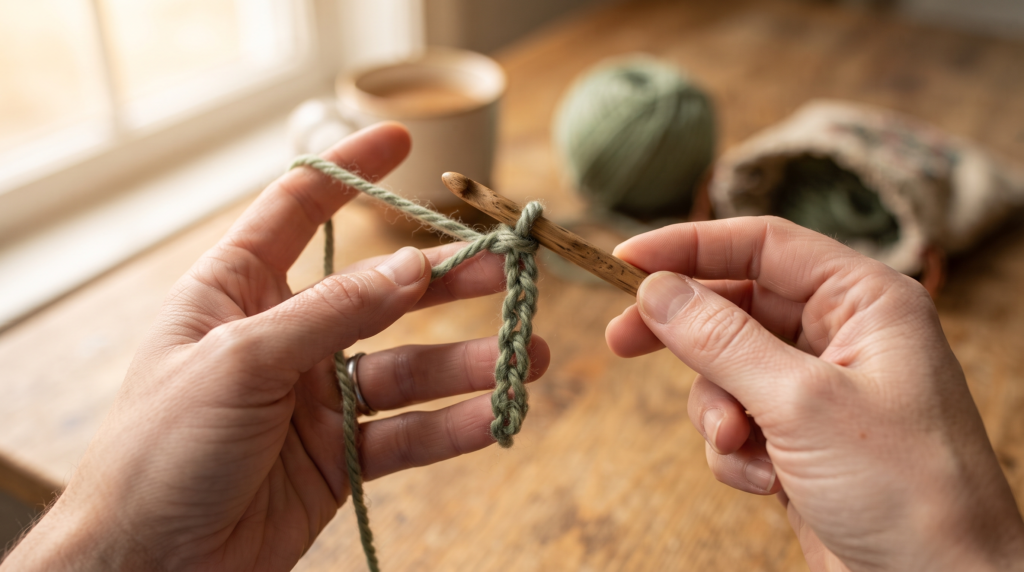
Every project starts with a slip knot on your hook, followed by a chain of loops (the foundation chain). This chain sets the width of whatever you’re making, so count carefully. A common beginner mistake is losing count partway through and ending up with an uneven starting row.
Single Crochet (SC)
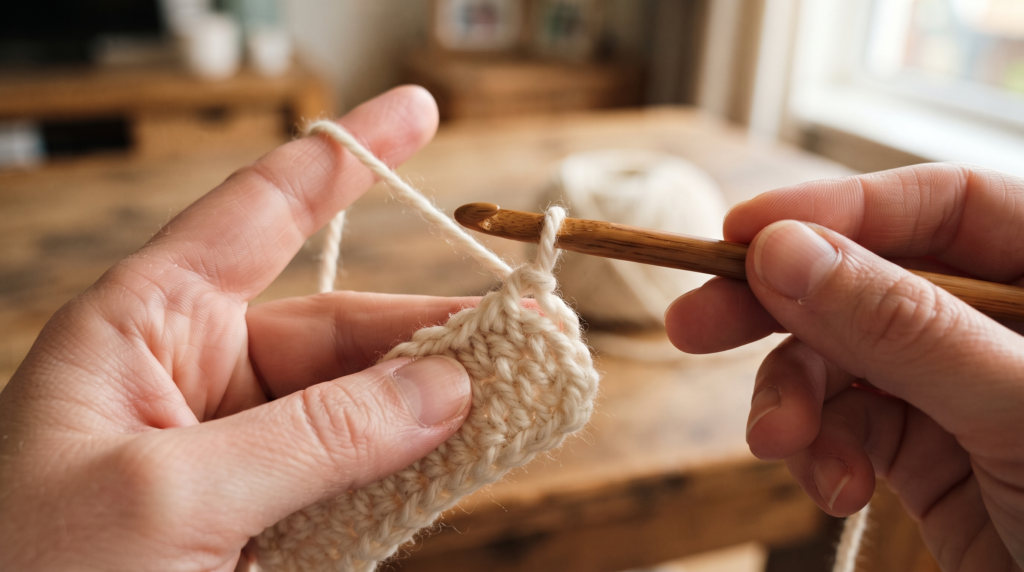
The single crochet is the easiest stitch to learn and the one nearly every beginner pattern starts with. Insert the hook into a stitch, yarn over, pull through, yarn over again, pull through both loops on the hook. That’s the entire stitch, repeated across the row.
Double Crochet (DC)
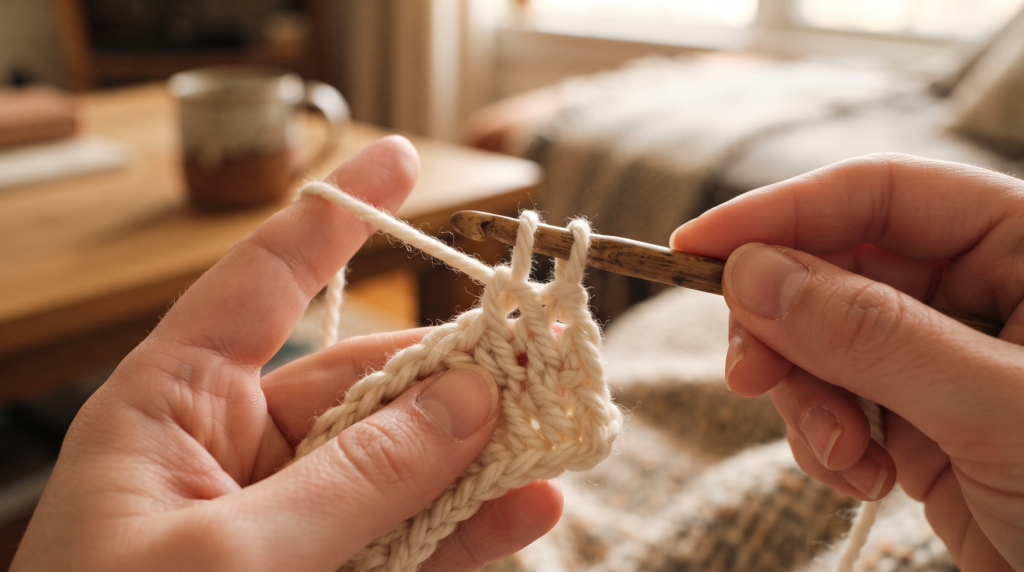
Once single crochet feels comfortable, double crochet moves faster and creates a taller, more open stitch. Here’s the full sequence: yarn over first, then insert the hook into the stitch. Yarn over again and pull through, leaving three loops on your hook. Yarn over once more and pull through the first two loops only, leaving two loops on the hook. Yarn over a final time and pull through the last two loops. That completes one double crochet. It reads like a lot of steps at first, but your hands pick up the rhythm within a few repetitions, and it works up roughly twice as fast as single crochet once it clicks.
Slip Stitch (SL ST)
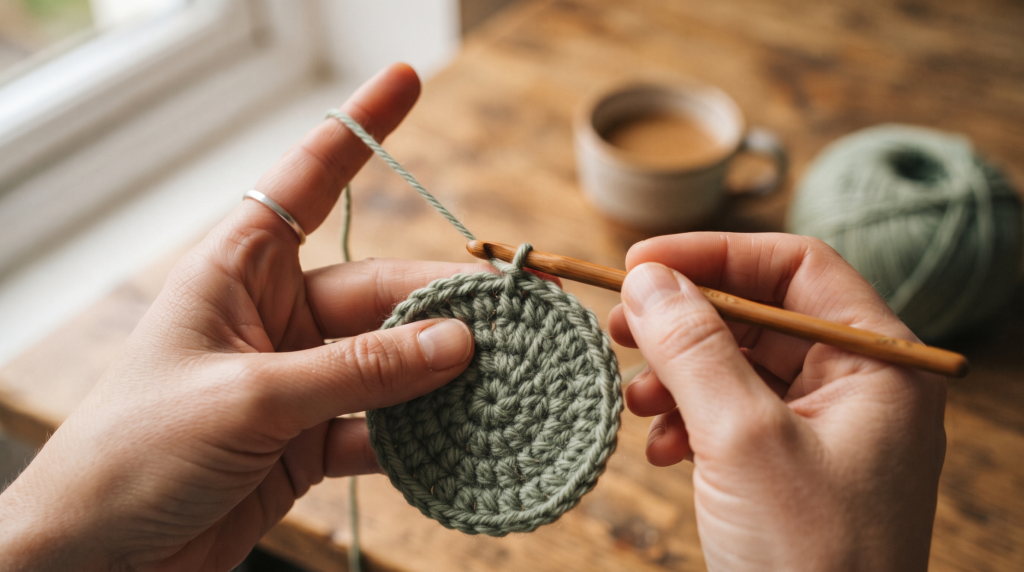
The slip stitch doesn’t add height. It’s mainly used to join rounds or move across stitches without building new rows, and it’s the stitch most beginners underuse simply because nobody explains what it’s actually for.
How to Crochet a Beginner Coaster (Step by Step)
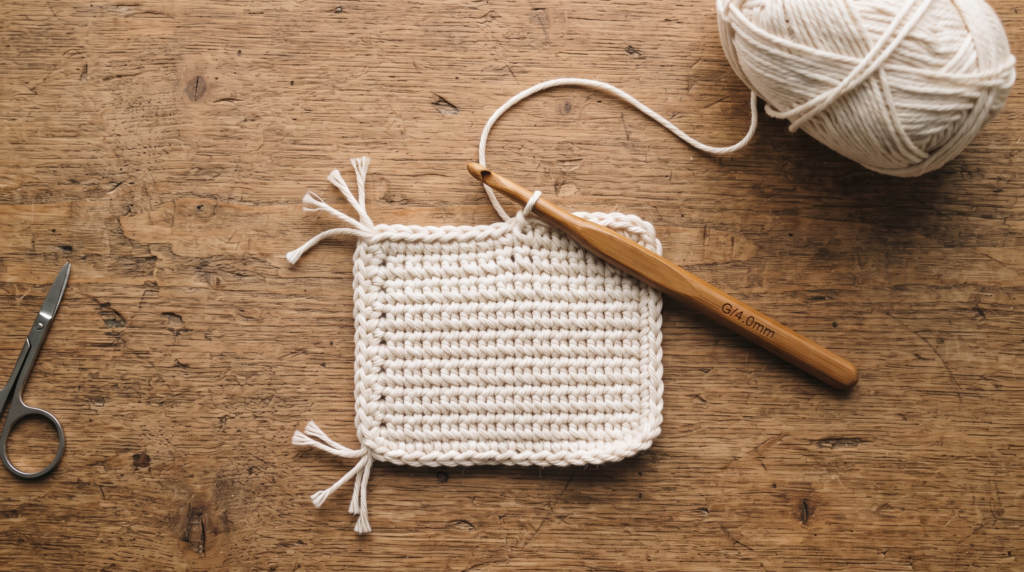
Step 1: Chain Your Foundation
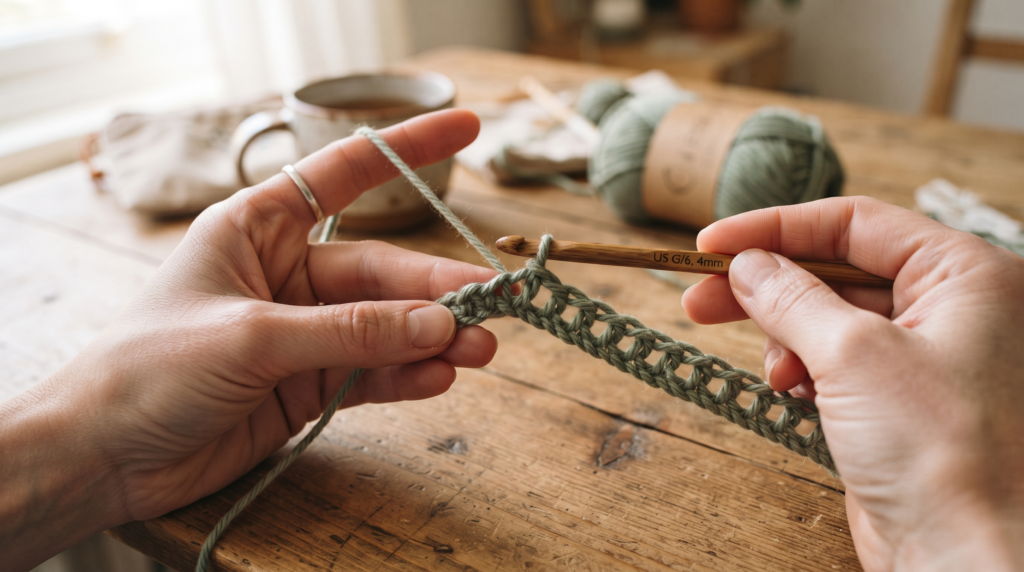
Chain 15 stitches. This becomes the width of your coaster.
Step 2: Work Your First Row
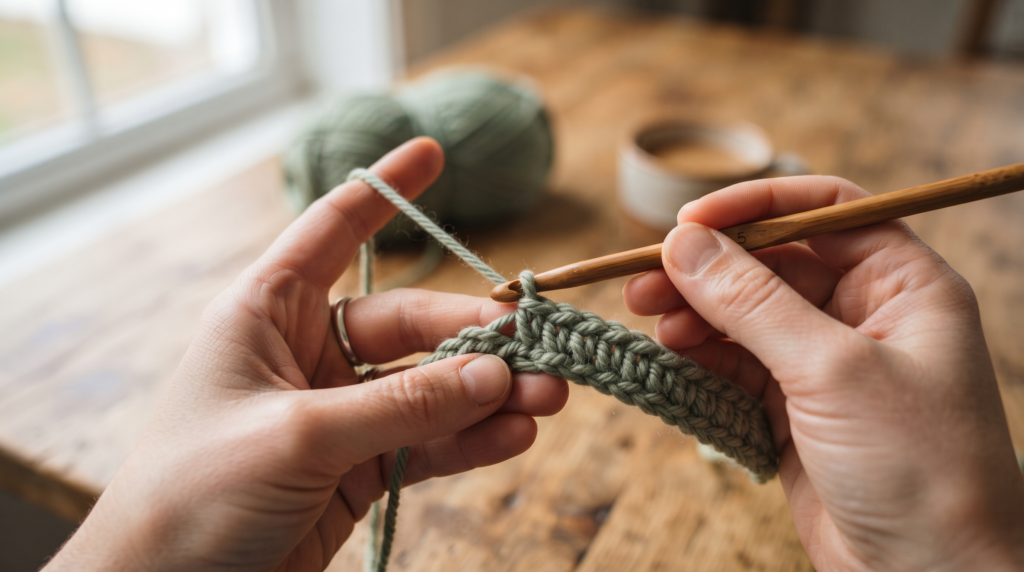
Starting in the second chain from the hook, single crochet across the entire row. You should end with 14 single crochet stitches.
Step 3: Turn and Chain One
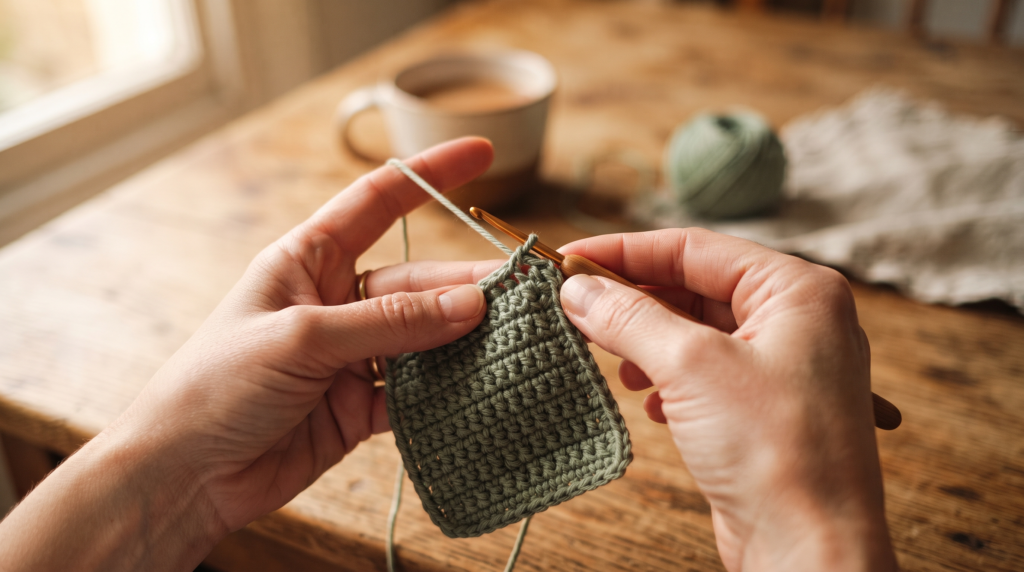
At the end of each row, chain one and turn your work. This chain doesn’t count as a stitch, it just sets you up for the next row.
Step 4: Repeat Until Square
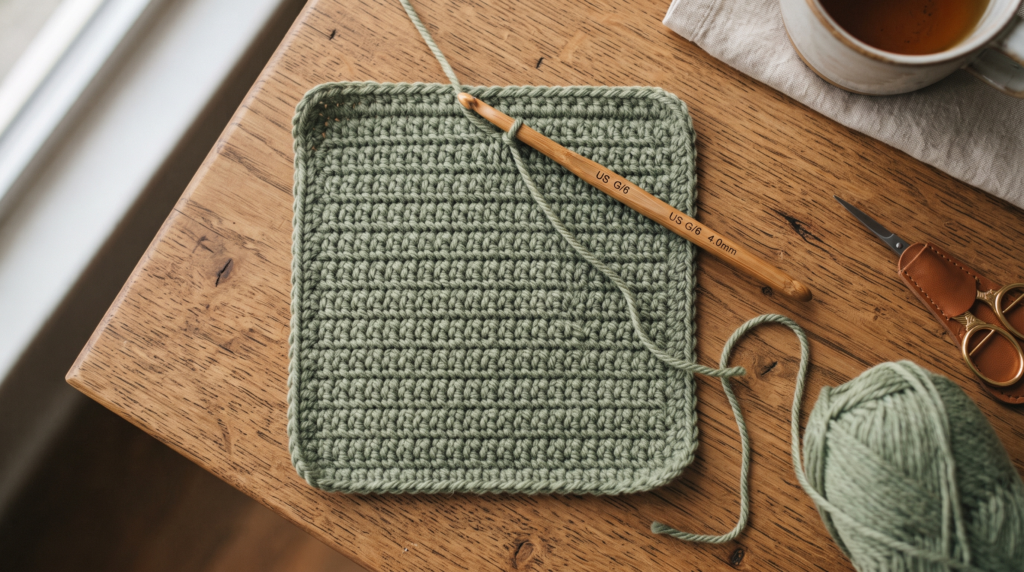
Continue single crocheting across each row until your piece is roughly square, usually around 14 to 15 rows for a standard coaster.
Step 5: Fasten Off
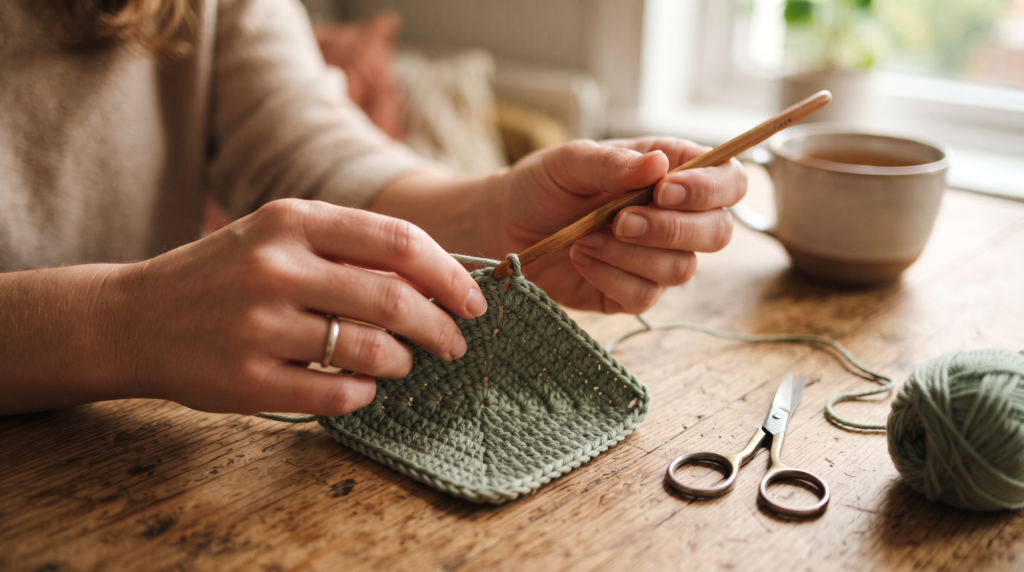
Cut the yarn, leaving a 6-inch tail, and pull it through the last loop to secure it.
Step 6: Weave In Ends
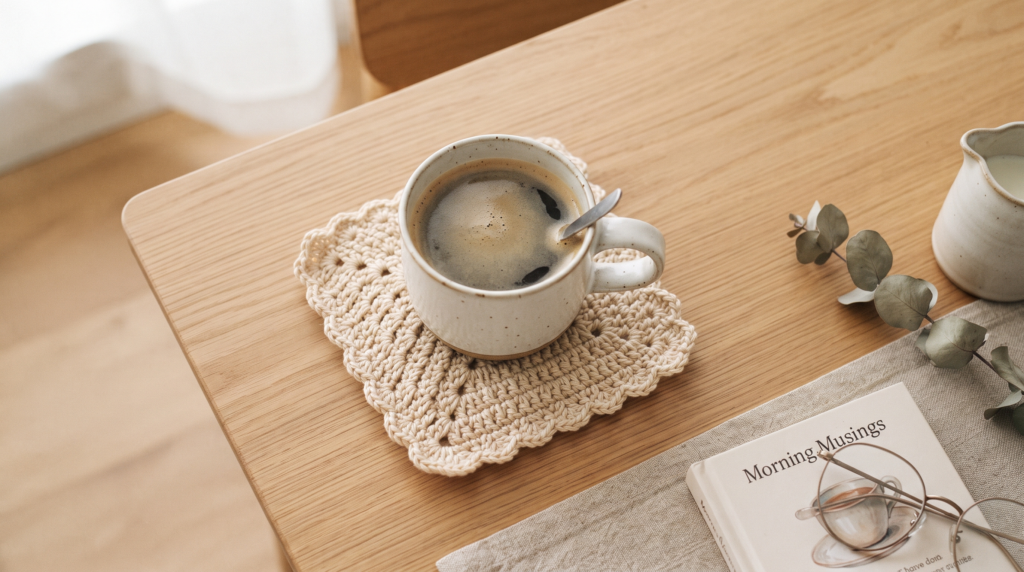
Thread the tail through a yarn needle and weave it through several stitches on the back of your work, then trim any excess.
Common Beginner Mistakes
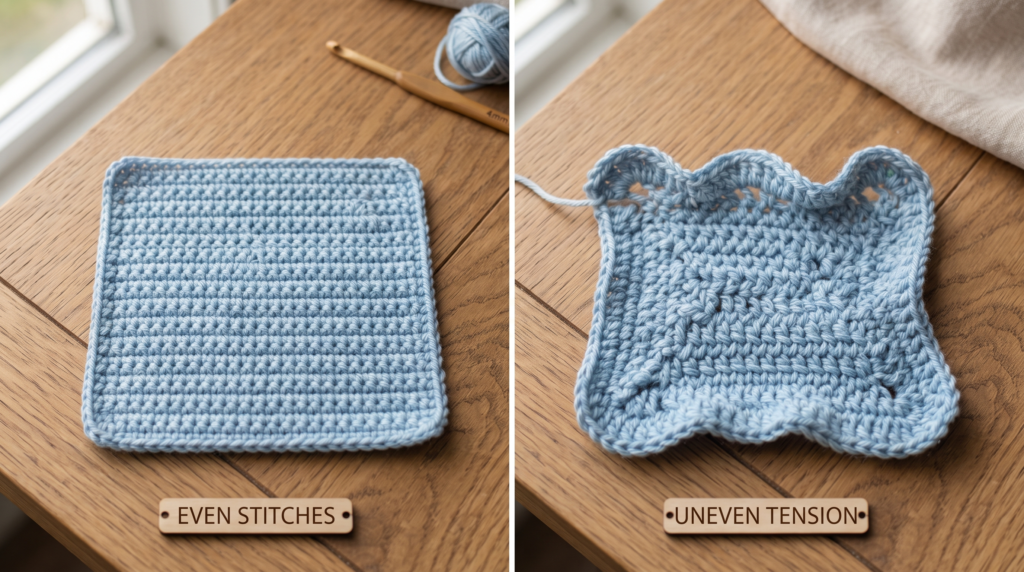
- Starting with a project too big to finish, then losing motivation halfway through
- Holding the yarn too tight, which causes hand cramping and uneven stitches
- Using dark or fuzzy yarn that hides individual stitches
- Losing count on the foundation chain and not noticing until several rows in
- Skipping the turning chain, which throws off the entire row count
How to Read a Crochet Pattern for Beginners
Once you know a couple of stitches, the next hurdle is usually the pattern itself, not the stitches. Crochet patterns use abbreviations that look confusing at first but follow a consistent logic. SC means single crochet, DC means double crochet, and a number before a stitch (like “6 SC”) tells you how many times to repeat it. Most patterns are read left to right, row by row, with instructions in parentheses telling you how many stitches you should have by the end of each row. If your stitch count doesn’t match what the pattern says, that’s your signal to stop and check the previous row before continuing.
Asterisks show up constantly in patterns and confuse a lot of beginners the first time they see them. An instruction like “*SC, DC, repeat from * to end” simply means you repeat everything between the asterisks until the row is finished. It’s not a separate stitch, just shorthand so the pattern doesn’t have to write the same sequence out fifteen times.
One more habit worth building early: count your stitches at the end of every single row, not just when something looks off. Catching a miscount one row late takes thirty seconds to fix. Catching it five rows late usually means unraveling all five.
Frequently Asked Questions
What’s the easiest crochet stitch for a total beginner? Single crochet. It only involves one motion per stitch and forms the foundation nearly every other stitch builds on.
Do I need expensive yarn to start? No. A basic worsted weight acrylic yarn works fine for learning and is far more affordable than wool or specialty fibers, which are better saved for once you’re comfortable with tension.
How long does it take to learn crochet basics? Most people can comfortably work single crochet within a single practice session, and finish a small project like a coaster within their first week of regular practice.
Why does my crochet keep getting narrower or wider as I go? This almost always comes down to accidentally skipping stitches or adding extra ones at the end of a row. Counting your stitches at the end of every row catches this before it compounds.
Can I learn crochet from patterns alone, without video help? It’s possible, but most beginners find it far easier to learn the physical motion from a video first, then switch to written patterns once the stitches feel familiar in your hands.
Crochet isn’t the only beginner-friendly craft worth trying. If you’re deciding between hobbies, our complete guide to hand and machine sewing covers another low-cost way to start making things with your hands.
For a deeper reference on stitch terminology and international pattern conventions, the Craft Yarn Council’s standards and guidelines is a solid resource.