
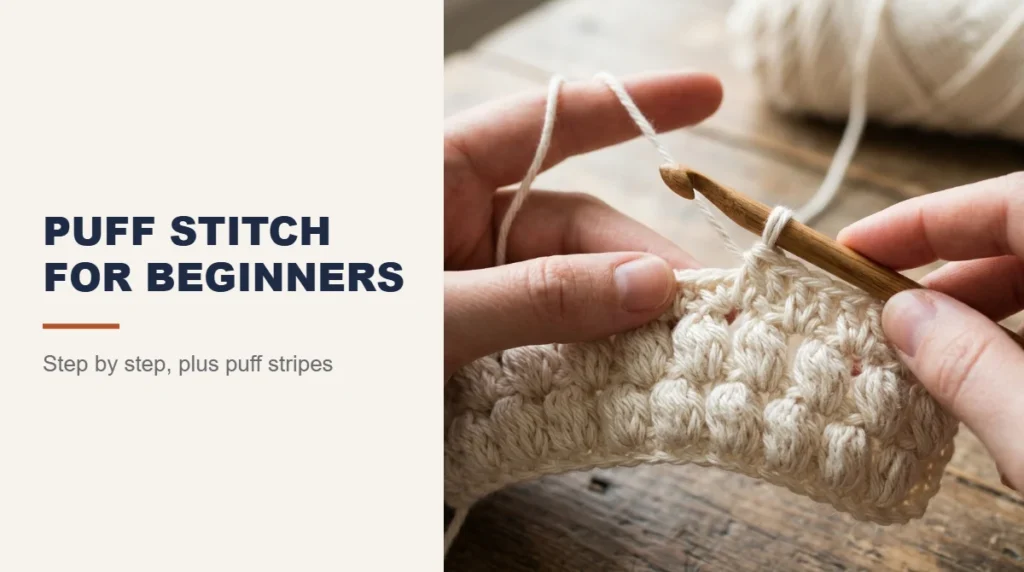
The puff stitch is one of the prettiest textures you can add to a crochet project, and it is much easier than it looks. Each puff is simply a few long loops pulled up in the same stitch and closed together, which gives you a soft, rounded bump that sits on the surface of the fabric. Rows of puffs look lovely on blankets, cushions, hats and baby items, and they are a favorite on Pinterest for good reason.
This guide is written for beginners who already know how to chain and work a single crochet. You will learn exactly how to make a puff stitch, how it differs from the bobble and popcorn stitches, how to keep the puffs neat, and how to use them in a simple puff stripe blanket. If you are completely new to the hook, start with our crochet for beginners starter guide and come back once single crochet feels comfortable. A smooth worsted weight cotton yarn in a light color is the easiest choice for practice, because you can see every loop.
This post contains affiliate links. As an Amazon Associate I earn from qualifying purchases, at no extra cost to you.
What Is a Puff Stitch in Crochet?
A puff stitch is a cluster of loops that are all pulled up from the same stitch and then closed in one movement. Because the loops are long and loose, they bunch together into a soft, pillowy bump. The result is raised on one side of the fabric, which is why puff stitches are usually worked so that the bumps face the right side of the project.
Patterns write it in slightly different ways. You may see it shown as “puff”, “puff st” or “PS”, and the pattern will usually tell you how many times to pull up a loop. Three pulls give a slim puff, four give a fuller one, and five give a very round, chunky puff. All of them use the same basic motion, so once you can make one, you can make them all. The Craft Yarn Council keeps a helpful list of standard crochet abbreviations if a pattern uses a term you do not recognize.
What You Need to Practice
You do not need any special tools to learn the puff stitch. A medium weight yarn and the hook size printed on its label are all you need. Very fuzzy or dark yarns make it hard to see the loops, so save those for later.
- Smooth worsted weight yarn in a light color (cotton or a cotton blend shows the loops clearly)
- The hook size recommended on the yarn label, usually 5 to 5.5 mm for worsted weight
- A few stitch markers for the first and last stitch of each row
- Scissors and a blunt tapestry needle for weaving in ends
Before you start a full project, make a small practice swatch about 15 to 20 stitches wide. It lets you get the feel of the stitch, and it also shows you how much the puffs pull the fabric in, which matters when you plan the width of a blanket.
How to Make a Puff Stitch Step by Step
These steps use US crochet terms and a puff with four pulls, which is the most common version in beginner patterns. Work them slowly the first few times and look at the loops on your hook after each step.
- Yarn over and insert your hook into the stitch where the puff will sit.
- Yarn over again and pull up a loop. Lift it to about the height of a half double crochet. You now have 3 loops on the hook.
- Yarn over, insert the hook into the same stitch, yarn over and pull up another long loop. You now have 5 loops.
- Repeat step 3 two more times. You now have 9 loops on the hook.
- Yarn over and pull through all 9 loops in one smooth motion.
- Chain 1 to close the puff and lock it in place, if your pattern asks for it.
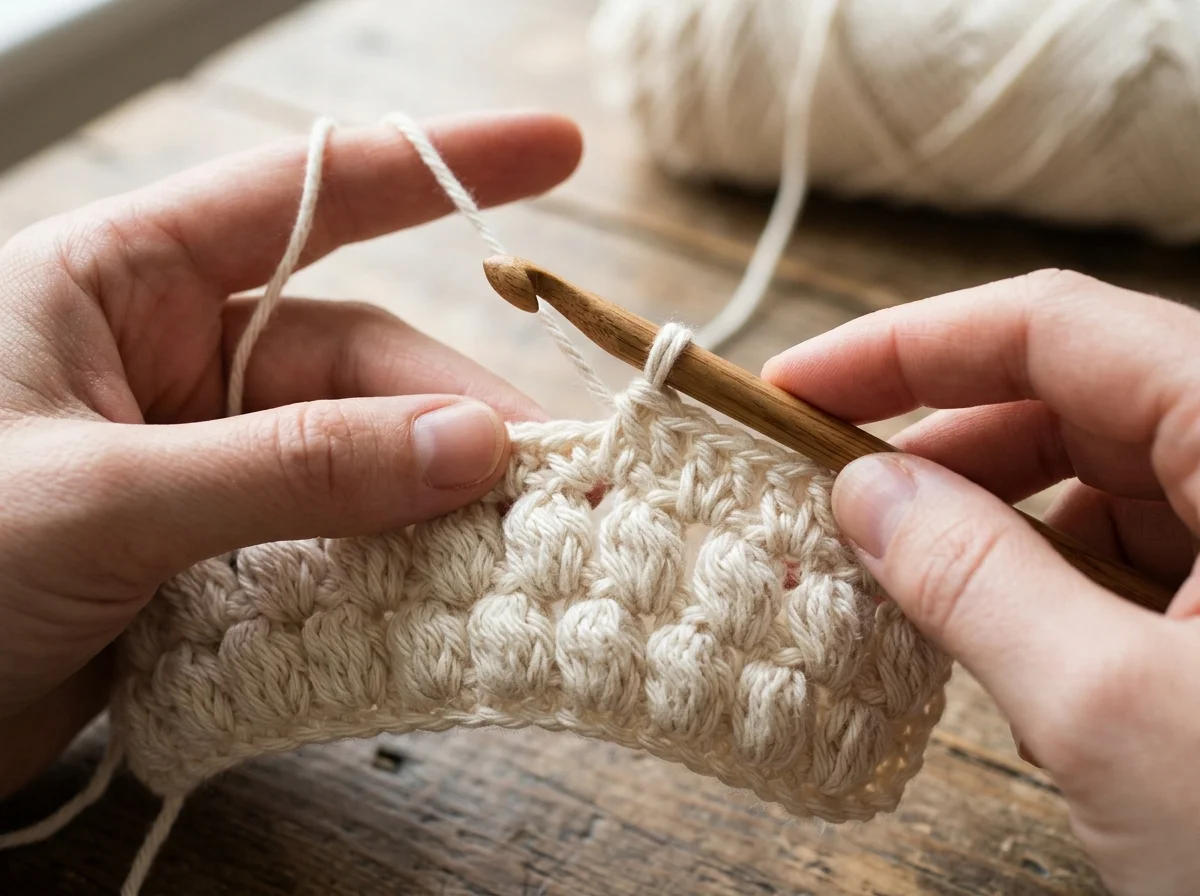
The first few puffs often look uneven, and that is completely normal. The main thing to watch is the height of the loops. If one loop is shorter than the others, the puff will lean or look flat on one side. Some crocheters hold the loops gently against the hook with an index finger so they do not shrink while the next loop is being pulled up.
Pulling through 9 loops can feel stiff at first. If the hook gets stuck, turn it slightly so the throat faces down and rock it through one loop at a time while keeping the yarn over in the hook. A hook with a pointed tip and a smooth finish also makes this step easier.
Puff Stitch vs Bobble vs Popcorn Stitch
Beginners often mix up these three stitches because they all make a raised bump. The difference is in how the loops are built and closed, which changes the shape and how much yarn each one uses.
| Stitch | How it is made | Look |
|---|---|---|
| Puff | Several long loops pulled up in one stitch, then closed together | Soft, rounded and pillowy |
| Bobble | Several unfinished double crochets in one stitch, closed together | Firm, raised and round |
| Popcorn | Several complete double crochets, then the first and last are joined | Strongly raised and cupped |
For a first textured blanket, the puff is usually the friendliest of the three. It has no half finished stitches to keep track of, and its softer shape is comfortable to sit or sleep under. Bobbles and popcorns are worth learning next, once you are confident counting stitches.
How to Keep Your Puff Stitches Neat
Neat puffs come down to even loops and consistent tension. Pull each loop up to the same height, and do not yank the final yarn over too tight, because that squeezes the puff and makes it look small. If your puffs look thin, try one more pull per puff or go up half a hook size. If they look loose and holey, try one less pull.
Counting matters as well. On the row after a puff row, it is easy to work into the closing chain instead of the top of the puff, which adds an extra stitch without you noticing. Find the top of each puff before you insert your hook, and place a stitch marker in the first and last stitch of every row so the edges stay straight.
Finally, remember that the puffs show best on one side. When you work puffs on every other row, they will all face the same side of the fabric. That side is the right side of your project, so keep it facing out when you sew or join pieces.
How to Use Puff Stitch in a Stripe Blanket
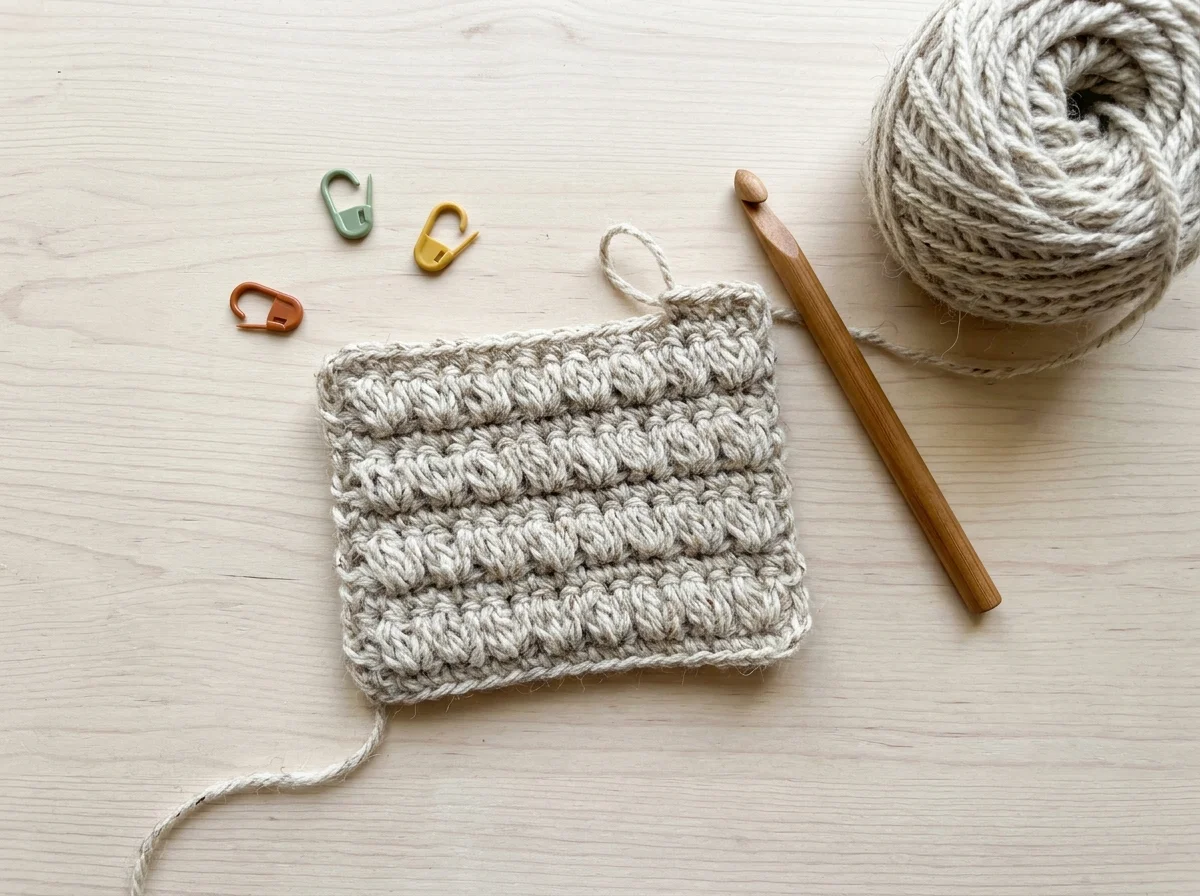
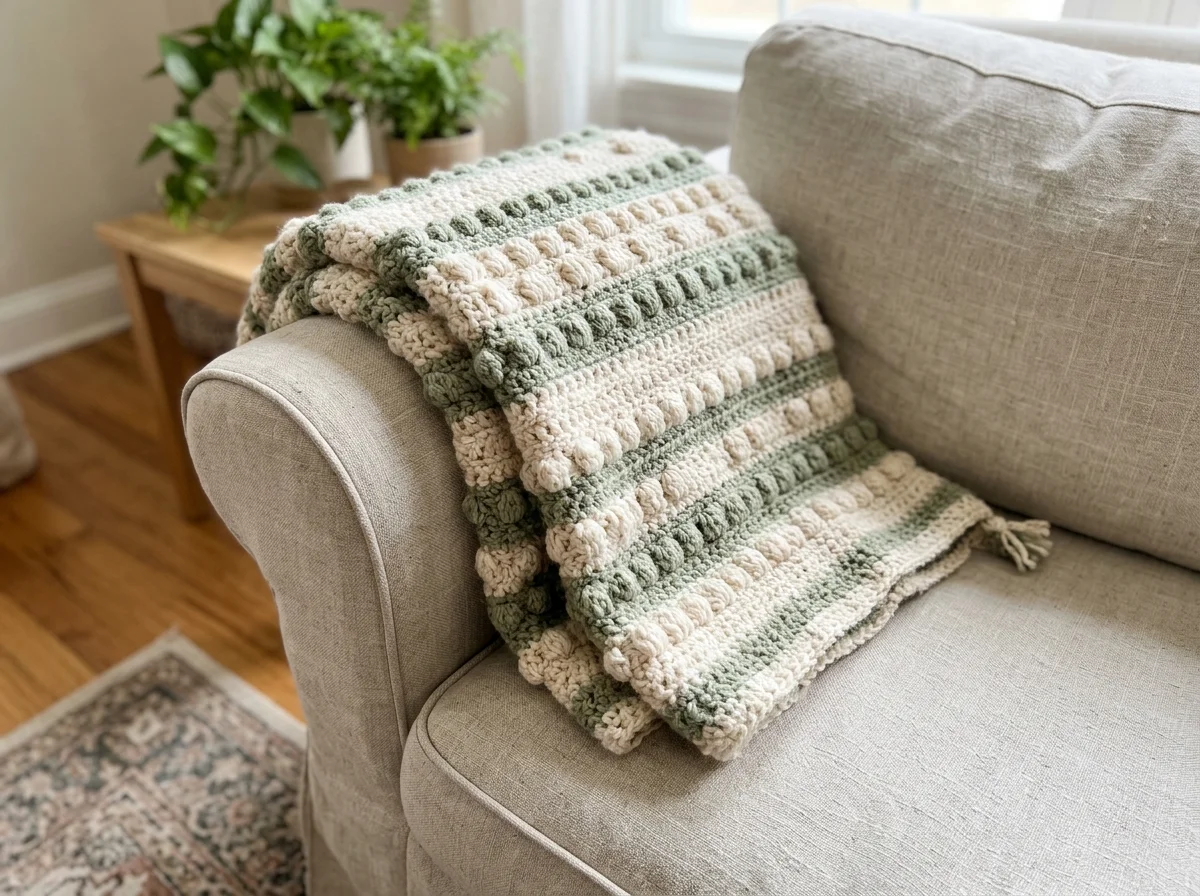
A puff stripe blanket is a classic way to use this stitch, and the structure is simple. You alternate a row of puffs with a row of single crochet. The single crochet rows keep the fabric firm and give the puffs a flat background to stand out against. Changing color for each puff row turns those bands into stripes.
Here is a stitch structure that keeps the count steady. Start with an odd number of single crochet stitches. On the puff row, chain 2 (it does not count as a stitch), make a puff in the first stitch, then chain 1, skip the next stitch and make a puff in the following stitch. Repeat to the end so the row finishes with a puff in the last stitch. On the next row, chain 1 and work one single crochet into the top of every puff and one into every chain 1 space. Because the puffs and spaces together equal your starting stitch count, every single crochet row has the same number of stitches as the first one.
To begin, chain one more than the odd number of stitches you want, then work a single crochet into the second chain from the hook and every chain across. Swatch first so your own gauge decides the width, and weigh the swatch to estimate yarn, because puff stitches use noticeably more yarn than plain single crochet. Our guide on how to crochet a blanket for beginners walks through blanket sizes, swatching and borders in detail. For the stripes, see our step by step guide to changing colors in crochet.
Common Puff Stitch Mistakes and Fixes
Most puff stitch problems are small and easy to fix once you know what to look for. Check your work every couple of rows rather than waiting until the end.
- Puffs that lean: one loop was shorter than the rest. Lift every loop to the same height before the next yarn over.
- Fabric that grows wider: a stitch was added, often in the closing chain or the turning chain. Count each row and use markers on the edges.
- Fabric that narrows: the last stitch of a row was missed. Check that the final puff or single crochet goes into the last stitch.
- Stiff, tight puffs: the yarn over that closes the puff was pulled too hard, or the hook is too small. Relax your hand or go up half a size.
If you prefer a more even, flat texture to practice tension first, the moss stitch crochet blanket is a great warm up project. It uses only chains and single crochet, and it teaches the same habit of counting every row.
FAQ
How many loops are in a puff stitch?
Most puff stitches have 7 or 9 loops on the hook before you close them, which comes from pulling up a loop 3 or 4 times. Follow the number in your pattern, and use the same number for every puff in the project.
Does the chain 1 after a puff count as a stitch?
The closing chain 1 normally does not count as a stitch. It just locks the puff. On the next row, work into the top of the puff, not into that chain, unless the pattern says otherwise.
Is puff stitch good for a baby blanket?
It can be, as long as the puffs are firm and the fabric has no large holes that little fingers can catch in. Our guide to a crochet baby blanket for beginners covers sizes, yarn and safety tips.
Why do my puff stitches look flat?
Flat puffs usually mean the loops are short or the final pull through was tight. Pull the loops up a little higher, add one more pull per puff, or try a slightly larger hook.
The Bottom Line
The puff stitch is a simple way to give your crochet soft, eye catching texture. Pull up a few long loops in the same stitch, keep them the same height, close them with one smooth pull, and count your stitches every row. Practice on a small swatch, then use puff rows between single crochet rows to make a cozy striped blanket that looks far more advanced than it really is.